
Custom DTH Drilling Rig Manufacturer in China
We provide DTH drilling rigs, designed for efficient and reliable performance in challenging drilling environments. Our custom solutions are built to handle tough conditions, ensuring maximum durability and precision. With a focus on innovation and reliability, we offer tailored rigs to meet the specific needs of your project.
Sinodrills - Your Trusted DTH Drilling Rig Manufacturer from China
As your trusted DTH drilling rig manufacturer from China, we specialize in providing durable and high-performance DTH drilling rigs for a wide range of drilling applications. Our custom-engineered rigs are designed to withstand tough conditions, delivering efficiency and precision. With a focus on innovation and reliability, we ensure the highest standards of quality for your drilling needs.
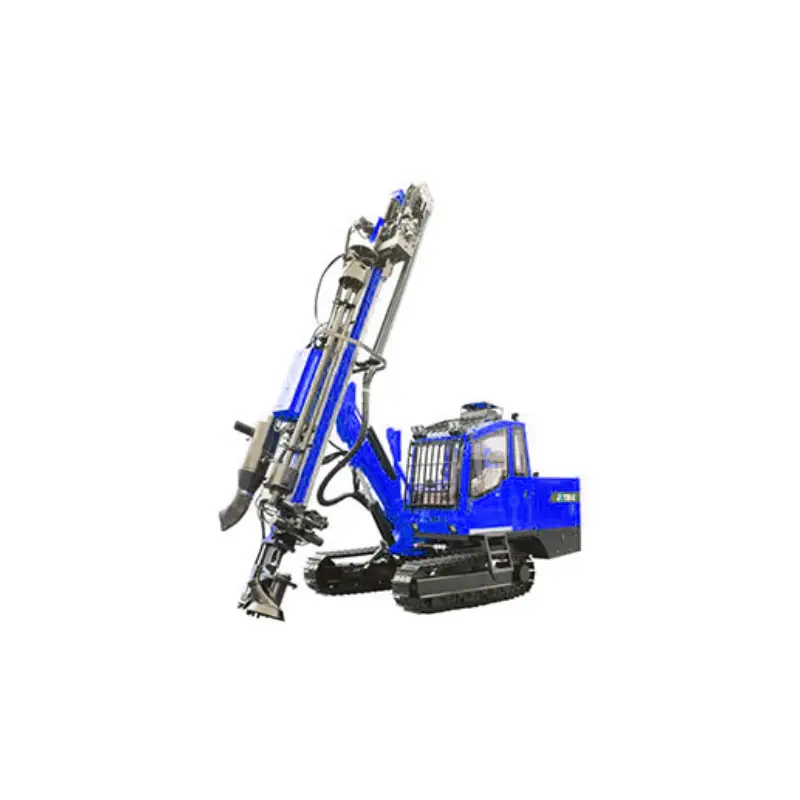
dTH drill rig
- Enhanced Efficiency with Automation: The automatic rod changer streamlines operations by autonomously handling rod storage, changing, and connection, significantly boosting drilling efficiency and reducing manual intervention.
- Optimized Operator Comfort and Safety: The inclusion of a luxurious cabin and a hole locating device creates a safer and more comfortable operating environment, directly leading to reduced labor intensity and the need for fewer personnel on-site.
- Simplified Maintenance and Reduced Downtime: Unlike all-in-one rigs, the JK730-2’s design prioritizes convenient operation and maintenance, resulting in a lower downtime rate and improved overall productivity.
- Powerful Hydraulic Performance: Being a hydraulic DTH drill rig, it delivers robust and consistent power for effective drilling in various hard rock formations, ensuring reliable and efficient borehole creation.
dTH drill rig Applications
- Blasthole drilling: Production holes (for primary rock fragmentation) Pre-split holes (to create a fracture plane for controlled blasting)
- Mining: Mineral exploration, overburden removal, and creating space for infrastructure.
- Quarrying: Extracting stone blocks and preparing sites for aggregate production.
- Construction: Foundation drilling, piling, anchoring, and soil nailing.
- Water well drilling: Creating boreholes for accessing underground water resources.
- Geothermal drilling: Drilling holes for geothermal energy extraction.
- Oil and gas drilling: For shallower wells where air hammers are suitable.
- Ground consolidation: Improving soil stability for construction projects.
- Geotechnical drilling: For soil investigation and analysis.
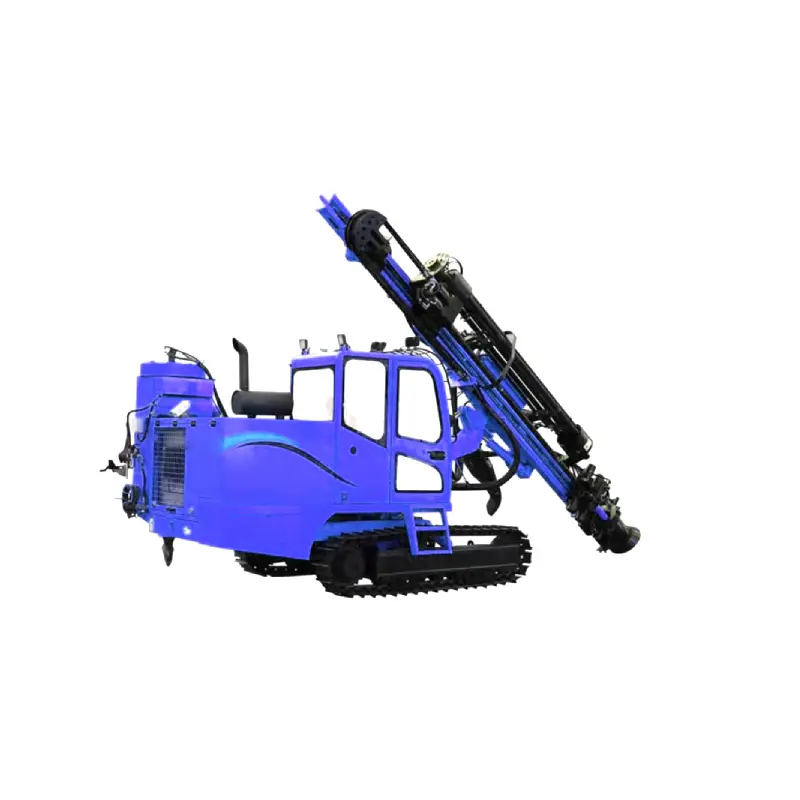
Customize Your Desired DTH Drilling Rig
Drilling Depth and Diameter Capacity
Tailor the rig’s capabilities to your specific project requirements by selecting a model that accommodates the necessary drilling depth and borehole diameter. This ensures the rig can efficiently handle the scale and specifications of your intended applications, whether it’s shallow exploration or deep production drilling.
Mobility and Mounting Configuration
Choose the appropriate mounting option, such as truck-mounted, crawler-mounted, or skid-mounted, based on the terrain and accessibility of your work sites. Selecting the right mobility solution ensures the rig can be easily transported and positioned for optimal drilling operations in diverse and challenging environments.
Power Source and Air Compressor Integration
Customize the power unit (diesel, electric) and consider the integration of an appropriately sized air compressor to match your drilling needs and site conditions. The selection of a suitable power source and compressor directly impacts the rig’s performance, efficiency, and operational costs, ensuring optimal DTH hammer operation.
Automation and Auxiliary Features
Enhance operational efficiency and safety by incorporating features like automatic rod changers, dust suppression systems, and GPS positioning. These advanced technologies can significantly reduce manual labor, improve drilling accuracy, and create a safer working environment, ultimately boosting productivity and reducing downtime.
what is DTH drilling rig?
A Down-The-Hole (DTH) drilling rig is a powerful and efficient machine used to create boreholes in hard rock formations. Its primary mechanism involves a pneumatic hammer located directly behind the drill bit, which rapidly strikes the rock to fracture it into smaller pieces.
Compressed air is then used to flush these cuttings out of the borehole. DTH drilling is known for its high penetration rates and ability to drill deep and precise holes in challenging geological conditions, making it widely used in mining, construction, water well drilling, and geothermal applications.
What is the difference between rotary and DTH drilling?
When it comes to creating boreholes in the earth, two prominent methods stand out: rotary drilling and Down-The-Hole (DTH) drilling. While both achieve the same fundamental goal of drilling into the ground, they employ distinctly different mechanisms to break and remove rock and soil.
Understanding these differences is crucial for selecting the most efficient and effective drilling technique for a given application and geological formation. Let’s delve into the core distinctions between these two widely used drilling methods.
Operational Principle
Rotary drilling achieves borehole creation by applying downward force and high rotational torque to a drill string equipped with a rotating bit. This continuous grinding and cutting action excavates the material.
Drilling fluids, such as mud or air, are crucial in rotary drilling for lubricating the bit, managing temperature, and efficiently transporting the generated cuttings up and out of the borehole. This method’s reliance on mechanical abrasion makes it adaptable to a broad spectrum of geological formations, encompassing both unconsolidated soils and competent rock.
Percussion Mechanism
In contrast, DTH (Down-The-Hole) drilling employs a distinct method by utilizing a pneumatic hammer situated directly behind the drill bit within the borehole. This hammer delivers rapid, high-impact blows directly to the rock face, causing it to fracture and fragment.
Compressed air serves a dual purpose in DTH drilling: it powers the reciprocating hammer action and simultaneously expels the crushed rock cuttings from the borehole. This direct percussive force makes DTH drilling exceptionally effective and efficient, particularly when drilling through hard and abrasive rock formations where the grinding action of rotary drilling may be less productive.
Distinct Excavation Techniques
The fundamental difference between rotary and DTH (Down-The-Hole) drilling lies in their primary rock excavation methods. Rotary drilling relies on the mechanical abrasion and cutting action of a rotating drill bit under applied pressure.
Conversely, DTH drilling employs a percussive mechanism, utilizing a pneumatic hammer that delivers rapid, high-energy impacts directly to the drill bit at the bottom of the borehole to fracture the rock.
Is DTH drilling better than top hammer?
Whether DTH (Down-The-Hole) drilling is “better” than top hammer drilling isn’t a straightforward yes or no, as each method excels in different conditions and applications.
DTH drilling shines in hard and abrasive rock formations, where its direct impact mechanism at the bottom of the hole delivers high penetration rates and straighter, more accurate boreholes, especially at greater depths.
The reduced energy loss down the drill string in DTH drilling makes it efficient for deeper drilling in challenging geology, commonly used in mining, deep foundation work, and water well drilling where precision and depth are critical.
Conversely, top hammer drilling is generally more efficient and cost-effective in softer to medium-hard rock conditions and for shallower hole depths. Its higher drilling speeds in suitable rock types make it advantageous for applications like quarrying, surface mining, and construction where faster penetration is needed for shorter holes.
Top hammer rigs also tend to have lower initial investment costs and can be more mobile for smaller-scale operations. Therefore, the “better” method depends entirely on the specific project requirements, the type of rock being drilled, and the desired depth and accuracy of the borehole.
What are the three main types of drilling rigs?
Drilling rigs come in various types, each designed to meet specific drilling needs across industries like oil, gas, and construction. The three main types of drilling rigs are land rigs, offshore rigs, and exploratory rigs.
These drilling rigs are chosen based on the terrain, depth, and the material being drilled.
- Land Rigs: Commonly used for onshore drilling, land rigs are versatile and can be deployed in various terrains. They are equipped to drill deep into the earth for oil, gas, or mineral exploration. These rigs are typically mobile, allowing easy transport to different locations for exploration and extraction activities.
- Offshore Rigs: Offshore rigs are designed to operate in marine environments, drilling for oil and gas beneath the seabed. They are anchored to the ocean floor or float on the surface, depending on the type. These rigs are built to withstand harsh weather conditions, ensuring safety and efficiency in deepwater drilling operations.
- Exploratory Rigs: Primarily used for geological surveys and exploration, these rigs are designed to gather samples from the earth. They are often smaller and more portable, allowing access to remote or challenging areas. Exploratory rigs help assess the potential for resource extraction before moving forward with larger-scale drilling operations.
Are DTH and MCF the same?
No, DTH (Down-The-Hole) drilling and MCF are not the same.
DTH refers to a type of drilling method and the equipment used, while MCF (thousand cubic feet) is a unit of measurement for natural gas volume.
DTH drilling rigs utilize a pneumatic hammer at the bottom of the borehole to fracture rock, making them efficient for hard rock formations. They are used in various applications like mining and water well drilling.
MCF, on the other hand, is a standard unit in the natural gas industry, primarily in the United States, to quantify the volume of natural gas produced or consumed. It’s a measure of quantity, not a drilling technique or equipment.
Send Your Inquiry Now
All-in-one DTH Drilling Rig Solutions for Your Project
We offer all-in-one DTH drilling rig solutions designed for efficiency and versatility. Our drill rigs are engineered to handle various drilling applications, providing maximum performance and durability. With advanced technology and customizable features, our DTH rigs ensure reliable operation in the toughest environments, streamlining your drilling process for optimal results.