
DTH hammers are critical tools in mining, construction, and quarrying, designed for efficient rock drilling. However, even the most durable DTH hammer can experience failures due to wear, improper handling, or unsuitable drilling conditions. Understanding these common issues helps operators maintain productivity and prevent costly downtime.
Regular inspection, proper lubrication, and correct drilling techniques are essential to prevent DTH hammer failures. By identifying early signs of wear, understanding component functions, and implementing preventive measures, drilling teams can extend tool life and ensure consistent performance. Effective maintenance not only saves costs but also enhances overall safety on site.
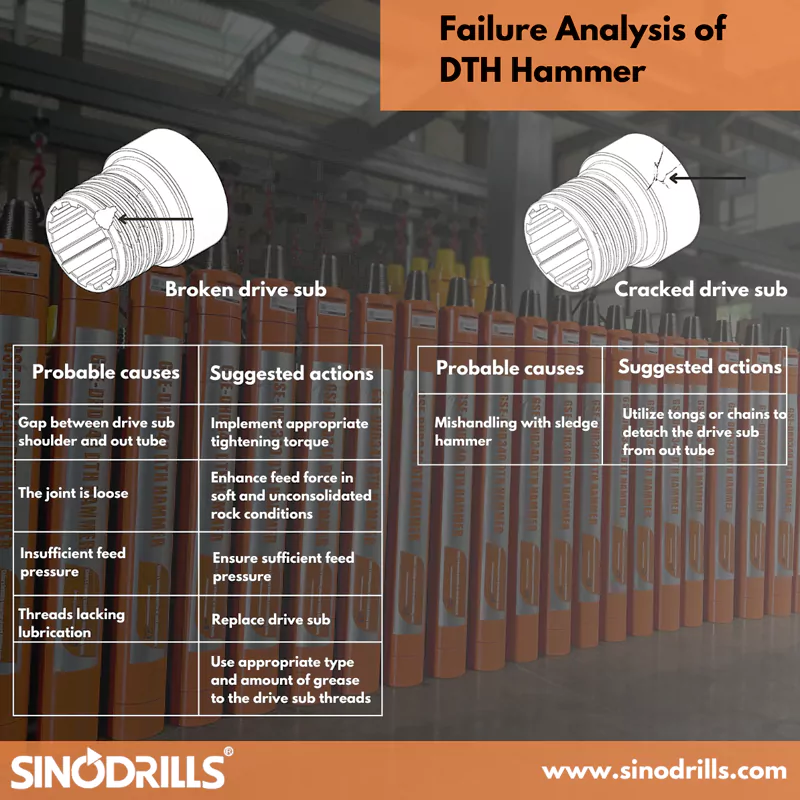
1. Broken Drive Sub
A broken drive sub often results when the connection between the drive sub shoulder and the out tube has excessive gaps or loose joints. In heavy drilling operations, insufficient feed pressure and a lack of lubrication at the threaded joint increase stress. Without proper torque and grease, the drive sub experiences uneven impact forces that eventually fracture the material.
To prevent this failure, ensure threaded surfaces have the right grease and are torqued to specification before drilling hard rock. Operators should increase feed pressure in unconsolidated formations to maintain stable contact and reduce shock loading. Routine inspection of the drive sub and timely replacement at the first sign of fatigue extend bit life.
Probable Causes:
- – Gap between drive sub shoulder and out tube
- – The joint is loose
- – Insufficient feed pressure
- – Threads lacking lubrication
Suggested actions:
- – Implement appropriate tightening torque
- – Enhance feed force in soft and unconsolidated rock conditions
- – Ensure sufficient feed pressure
- – Replace drive sub
- – Use appropriate type and amount of grease to the drive sub threads
2. Cracked Drive Sub
Cracking in the drive sub is commonly caused by mishandling during assembly or disassembly, such as hitting it with a sledgehammer rather than using correct tools. The impact can create micro‑fractures that propagate under heavy drilling loads. In mining environments, these cracks become stress concentrators, weakening the component prematurely.
Correct handling requires using tongs or chains to detach the drive sub from the out tube without bending or denting the metal. Preventing improper impact not only avoids cracks but also preserves the integrity of spline connections that transfer torque from the hammer to the bit.
Probable causes:
– Mishandling with sledge hammer
Suggested actions:
– Utilize tongs or chains to detach the drive sub from out tube
3. Broken Piston
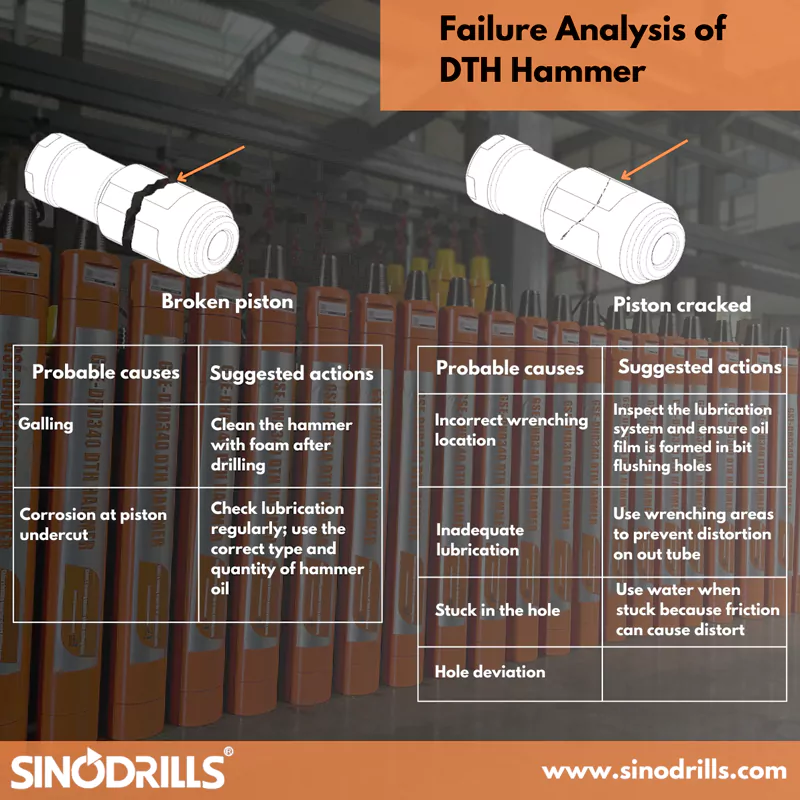
A piston may break because of galling, where metal surfaces weld and tear under high pressure, or because corrosion at the piston undercut weakens its structure. This type of failure is particularly common if drilling fluid or contaminants enter the hammer body, combining with inadequate lubrication to accelerate wear and stress fractures.
Regular maintenance is essential: flush and clean the hammer internally after drilling cycles and ensure adequate hammer oil reaches all impact surfaces. This reduces friction and corrosion, which are primary culprits in piston fatigue and breakage in rock drilling operations.
Probable causes:
– Galling
– Corrosion at piston undercut
Suggested actions:
– Clean the hammer with foam after drilling
– Check lubrication regularly; use the correct type and quantity of hammer oil
4. Piston Cracked
Piston cracks often occur when the wrong wrenching point is used during assembly, causing uneven stress distribution in the hammer’s impact mechanism. Insufficient lubrication and situations where the hammer gets stuck in the borehole or experiences hole deviation further concentrate forces at weak spots, promoting cracks.
Tech teams can mitigate piston cracking by ensuring oil films form in bit flushing holes, preventing dry starts that stress the piston. Using designated wrenching areas prevents distortion of the outer tube and helps maintain aligned, balanced impact forces throughout each drilling cycle.
Probable causes:
– Incorrect wrenching location
– Inadequate lubrication
– Stuck in the hole
– Hole deviation
Suggested actions:
– Inspect the lubrication system and ensure oil film is formed in bit flushing holes
– Use wrenching areas to prevent distortion on out tube
– Use water when stuck because friction can cause distort
5. Cracked Out Tube
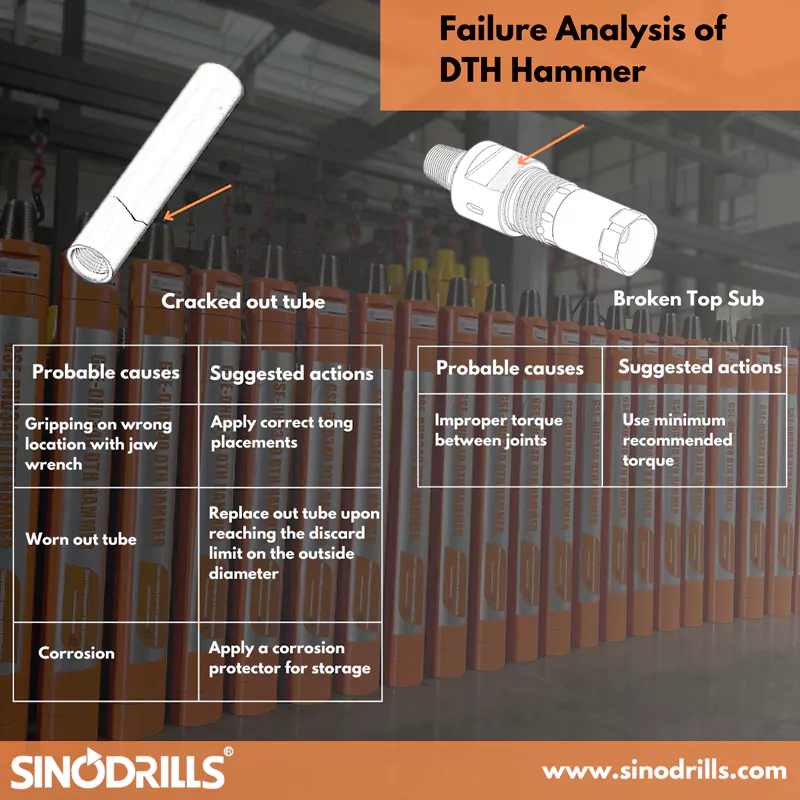
Cracked out tubes are frequently due to incorrect wrenching locations with jaw wrenches, worn tubes near discard limits, or corrosion that undermines tube wall strength. The out tube is critical for guiding the bit and transmitting rotational forces, so any crack dramatically increases the risk of drill misalignment and hammer failure.
To avoid this, proper placement of tongs or torque tools is essential, and the tube should be replaced when wear reaches the discard diameter limit. Applying corrosion protectors during storage also helps maintain structural integrity between drilling sessions.
Probable causes:
– Gripping on wrong location with jaw wrench
– Worn out tube
– Corrosion
Suggested actions:
– Apply correct tong placements
– Replace out tube upon reaching the discard limit on the outside diameter
– Apply a corrosion protector for storage
6. Broken Top Sub
The top sub can fail if joints are torqued improperly—too tight or unevenly—leading to stress fractures that propagate during heavy percussion drilling. This often happens when operators exceed recommended torque values hoping to compensate for vibration or to secure connections more tightly than necessary.
Prevent this by following manufacturer‑specified torque values, which balance secure thread engagement with material fatigue limits. Maintaining consistent torque across all joints preserves the alignment and strength of hammer assemblies under high‑impact rock drilling conditions.
Probable causes:
– Improper torque between joints
Suggested actions:
– Use minimum recommended torque
Here’s a chart showing you the popular DTH hammer drill bit failures with causes and preventive measures in the following:
| DTH Hammer Component | Common Failure | Causes | Prevention / Solution |
|---|---|---|---|
| Drive Sub | Broken | Excessive gaps, loose joints, insufficient feed pressure, lack of lubrication | Grease threads, torque to spec, increase feed pressure, inspect regularly |
| Drive Sub | Cracked | Mishandling during assembly/disassembly, impact damage | Use proper tongs/chains, avoid sledgehammers, inspect splines |
| Piston | Broken | Galling, corrosion, contamination, inadequate lubrication | Clean hammer, flush drilling fluid, maintain oil film, inspect piston |
| Piston | Cracked | Wrong wrenching points, stuck bit, hole deviation, dry starts | Use correct wrench points, ensure lubrication, avoid misalignment |
| Out Tube | Cracked | Incorrect wrenching, worn tube, corrosion | Proper tool placement, replace at wear limit, apply corrosion protection |
| Top Sub | Broken | Improper torque, over-tightening, uneven stress | Follow torque specs, maintain consistent joint alignment, inspect threads |
How to Inspect DTH Hammer Failure?
Proper inspection of a DTH hammer is essential to maintain drilling efficiency and prevent costly downtime. By systematically checking key components for wear, cracks, or damage, operators can identify issues early. Regular inspection ensures longer tool life, consistent performance, and safer operations in mining, quarrying, or construction environments.
- Check Drive Sub – Inspect the drive sub for cracks, fractures, or excessive wear on threads and splines. Uneven surfaces or deformation indicate stress points. Proper lubrication and correct assembly reduce breakage risk, ensuring stable hammer operation and preventing downtime during heavy-duty rock drilling.
- Examine Piston – Check the piston for cracks, corrosion, or surface galling. Any unusual wear patterns suggest improper lubrication or abrasive contaminants. Regular maintenance, flushing the hammer body, and maintaining oil films help prevent premature piston failure and ensure consistent drilling performance.
- Inspect Out Tube – Look for cracks, corrosion, or thinning walls in the out tube. Damaged tubes misalign the bit, causing inefficient drilling and extra stress on the hammer. Replace tubes near wear limits and apply corrosion protection to extend service life and maintain safe operation.
- Evaluate Top Sub – Examine the top sub for fractures, thread damage, or bending. Incorrect torque during assembly can weaken the component. Following torque specifications, using proper tools, and routinely inspecting joints ensures reliable connections and reduces the risk of catastrophic failure.
- Check Drill Bit – Inspect the drill bit for broken buttons, uneven wear, or clogging. Wear patterns indicate improper drilling techniques or incompatible rock types. Cleaning debris and replacing worn buttons prevent poor penetration and reduce stress on the hammer assembly during mining or rock drilling.
Conclusion
DTH hammer failures are inevitable in high-intensity drilling, but most issues can be minimized with proper maintenance and timely troubleshooting. By recognizing common problems such as worn seals, stuck pistons, or improper bit selection, operators can keep drilling operations running smoothly and avoid unexpected downtime.
Investing in quality drill bits and accessories plays a key role in reducing hammer failures. Using reliable components ensures better penetration, lower vibration, and longer tool life. At Sinodrills, we offer wholesale DTH hammer drill bits built for heavy-duty mining and construction tasks, helping you achieve efficient and consistent drilling performance.
For those looking to optimize their drilling operations, sourcing wholesale DTH hammer drill bits from Sinodrills provides both reliability and cost efficiency. Our range is engineered for durability in harsh environments, supporting projects of any scale while reducing maintenance needs and maximizing productivity.