
Proper drill pipe connections are the backbone of safe and efficient drilling operations. A secure connection ensures smooth torque transmission, prevents leaks, and reduces costly downtime. Understanding the correct techniques helps drillers maintain equipment integrity while improving overall performance in demanding drilling environments and complex ground conditions.
Mastering connection procedures is not only about tightening threads. It involves proper inspection, cleaning, lubrication, torque control, and alignment. When these essential techniques are applied consistently, drillers can extend tool life, enhance safety standards, and maintain reliable performance throughout every stage of the drilling project.
What is a Drill Pipe Connection?
A drill pipe connection is the threaded joint that links individual drill pipes together to form a continuous drill string. These connections allow torque, drilling fluid, and axial load to transfer efficiently from the drilling rig down to the drill bit. A secure connection ensures structural strength, pressure integrity, and smooth rotation during drilling operations.
Typically, a drill pipe connection consists of a pin (male thread) and a box (female thread) designed to fit precisely together. When properly cleaned, lubricated, and torqued, the connection creates a tight seal that prevents leaks and minimizes wear. Reliable connections are essential for maintaining safety, performance, and durability in demanding drilling environments.
API 5DP Drill Pipe Connection Method
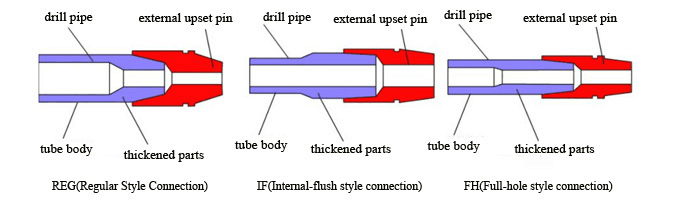
API 5DP drill pipe connection methods are designed to meet strict industry standards for strength, sealing, and durability in drilling operations. These connections ensure reliable torque transmission and pressure containment under demanding conditions. Understanding their structure and application helps improve drilling efficiency, safety, and long-term equipment performance in oil, gas, and foundation projects.
- Regular (REG) Connection – The Regular connection is one of the earliest API thread designs and is commonly used in smaller diameter drill pipes. It provides reliable tensile strength and moderate torque capacity. REG threads are suitable for light to medium drilling operations where balanced performance and cost control are important considerations.
- Full Hole (FH) Connection – Full Hole connections are designed with a larger internal diameter to allow improved drilling fluid circulation. This design reduces pressure loss and enhances cuttings removal efficiency. FH threads also offer stronger torsional capacity compared to REG, making them suitable for deeper wells and higher torque drilling conditions.
- Internal Flush (IF) Connection – Internal Flush connections provide a smooth internal bore between connected pipes, minimizing turbulence and pressure drops. This improves mud flow performance and reduces erosion risks inside the drill string. IF threads are commonly selected for applications requiring consistent hydraulic efficiency and stable downhole pressure control.
- Numbered Connection (NC) Connection – Numbered Connections combine features of REG and IF designs, offering improved strength and interchangeability. Identified by numbers such as NC38 or NC50, they provide higher torque capacity and better fatigue resistance. NC connections are widely used in modern drilling because they balance durability, compatibility, and operational reliability.
High-Performance Special Drill Pipe Joint Methods
High-performance special drill pipe joint methods are engineered to handle extreme torque, pressure, and complex well conditions. Compared with conventional API connections, these designs enhance sealing reliability, fatigue resistance, and structural strength. They are widely applied in shale gas, deepwater, and extended-reach drilling where operational safety and durability are critical requirements.
- Double-Shouldered Joint (such as XT57) – This design adds a secondary torque shoulder, increasing torsional resistance by approximately 30% compared with standard connections. The additional shoulder improves load distribution and vibration resistance. It is commonly used in shale gas fracturing wells where high torque and cyclic stress demand superior anti-fatigue performance.
- Metal Sealing Buckle (such as VAM TOP) – Precision-machined metal-to-metal sealing surfaces create a gas-tight barrier under high pressure. This design prevents gas migration and channeling, especially in deepwater and high-pressure wells. The reliable seal enhances well integrity and ensures stable performance in challenging offshore drilling environments.
- Direct-Connect (TLC) – This structure eliminates traditional couplings and increases the drift diameter by about 15%, improving internal fluid flow. Reduced external diameter transitions help lower friction against the wellbore. It is particularly beneficial in horizontal and extended-reach wells, minimizing torque drag and reducing the risk of stuck pipe incidents.
- Anti-Fatigue Joint – The anti-fatigue design optimizes stress distribution at the thread root, where cracks often initiate. By reducing stress concentration and improving geometric transitions, it significantly extends service life. This type of joint is ideal for deep wells and complex trajectories requiring repeated make-up and break-out cycles.
Most oil drill pipe joints adopt external thickening or internal and external thickening structures. Because the joint outer diameter is larger than the pipe body, it frequently contacts and rubs against the well wall or casing during drilling.
Continuous friction leads to wear, which can increase the risk of drill pipe failure. To prevent accidents such as breakage or tripping caused by joint wear, an anti-wear belt is typically applied to the female joint. This protective layer improves abrasion resistance and extends overall drill string service life.
How to Choose Proper Drill Pipe Connection Methods?
Selecting the proper drill pipe connection method directly affects drilling safety, torque transmission, sealing performance, and overall project efficiency. The right choice depends on well depth, formation conditions, torque requirements, and operational complexity. Careful evaluation of these factors helps prevent connection failure, reduce downtime, and extend drill string service life.
- Consider Drilling Depth and Pressure – Deeper wells and high-pressure environments require connections with greater tensile strength and sealing reliability. Standard API threads may be sufficient for shallow wells, while high-pressure or deepwater operations often demand metal-seal or double-shouldered connections to maintain structural integrity and prevent leakage.
- Evaluate Torque and Load Requirements – High-torque applications such as shale gas or horizontal drilling need connections with enhanced torsional resistance. Double-shouldered or premium joints provide better load distribution and fatigue resistance. Matching torque capacity with rig performance prevents thread damage and premature connection failure.
- Assess Hydraulic Performance Needs – If efficient drilling fluid circulation is critical, choose connections with larger internal diameters or smooth bore designs. Internal Flush (IF) or direct-connect types reduce turbulence and pressure loss. Improved hydraulics enhance cuttings removal and stabilize downhole pressure conditions.
- Analyze Wear and Fatigue Conditions – In abrasive formations or extended-reach wells, connection wear becomes a major concern. Anti-fatigue joints and anti-wear belts help reduce stress concentration and friction damage. Selecting wear-resistant designs extends service life and minimizes the risk of costly drill string accidents.
- Ensure Compatibility and Standard Compliance – Always verify that the selected connection meets API standards and matches existing drill string components. Proper interchangeability avoids make-up issues and operational delays. Working with reliable suppliers ensures consistent manufacturing quality and long-term performance stability.
Conclusion
Strong and reliable drill pipe connections directly influence drilling efficiency, safety, and overall project success. By applying correct make-up torque, inspecting threads carefully, and following standardized procedures, drillers can significantly reduce equipment failure and unplanned downtime. Consistent attention to these essential techniques ensures smoother operations in challenging piling and foundation projects.
In addition, selecting compatible tools and maintaining proper connection practices will extend the service life of drill pipes and related equipment. Preventive maintenance, routine inspections, and trained operators are key factors in achieving stable performance. Investing time in correct connection methods ultimately protects both equipment and project profitability.
For dependable performance in piling and foundation drilling, choosing trusted equipment suppliers makes a difference. Get wholesale piling drilling tools from our Sinodrills to ensure durability, precision, and reliable connection systems. We provide professional solutions designed to support efficient drilling operations and long-term project success.