
In the demanding world of drilling, precision and reliability are paramount. Whether you’re boring for water, laying foundations, or exploring for resources, the components that make up your drill string must withstand immense forces. Understanding how these vital pieces connect is fundamental to successful operations, and at the heart of this connection lies the concept of “Box and Pin.”
This essential threading system ensures that every drill rod, hammer, and drill bit works in harmony, transmitting power efficiently from the surface down to the cutting face. Join us as we demystify the “Box and Pin” – the unsung hero that forms the backbone of any effective drilling operation.
What is BOX in Drilling?
In drilling, the “BOX” refers to the female end of a threaded connection on a drill string component. It features internal (inside) threads designed to receive and securely engage with the male (pin) threaded end of another component.
The box connection is precisely machined to withstand the immense forces encountered during drilling, including rotational torque, tension, compression, and percussive impacts, ensuring a robust and sealed joint within the drill string.
What is PIN in Drilling?
In drilling, the “PIN” refers to the male end of a threaded connection on a drill string component. It features external (outside) threads that are precisely cut to mate with the internal (box) threads of another component.
The pin connection is designed for durability and strength, ensuring a secure and leak-proof joint capable of transmitting the significant rotational and percussive forces from the drill rig down to the drill bit during drilling operations.
What is a BOX and PIN Joint?
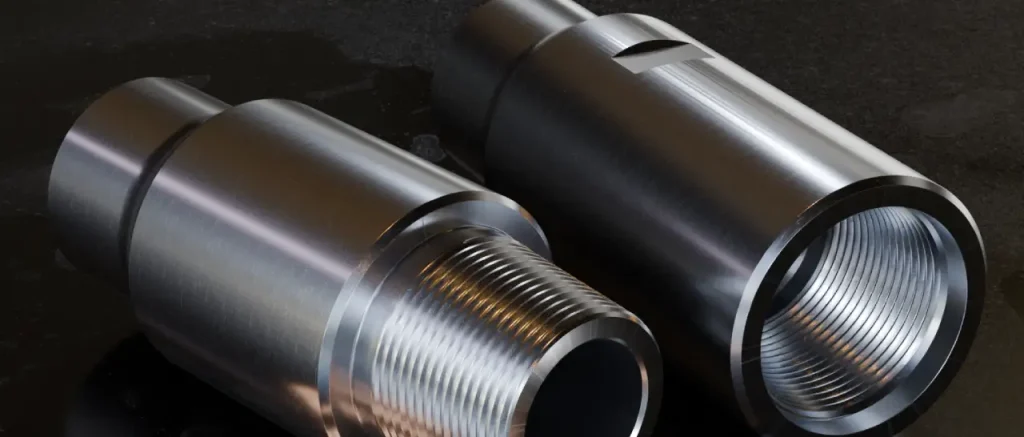
A “BOX and PIN joint” in drilling refers to the fundamental threaded connection system used to unite various components of a drill string, such as drill rods, drill collars, and specialized adapters.
It is characterized by one component having a male, externally threaded end (the “PIN”) and the other having a female, internally threaded end (the “BOX”). When assembled, the pin is screwed into the box, creating a robust, secure, and often sealed union that is capable of transmitting significant forces downhole.
This type of joint is critical because it ensures the structural integrity of the entire drill string, allowing for the efficient transfer of rotational torque and percussive energy from the drilling rig to the drill bit.
The precise machining of both the box and pin threads, often to industry standards like API, is essential for maintaining a strong connection that can withstand the demanding conditions of drilling, including high pressures, vibrations, and varying downhole temperatures.
Types of Adapter Thread Connections
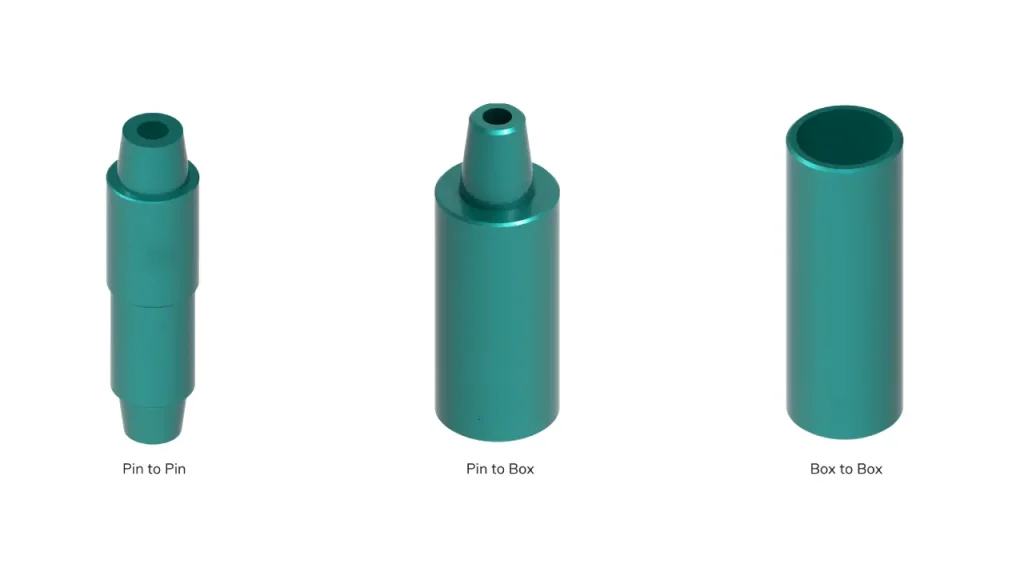
Adapters play a crucial role in connecting components with different thread types in machinery and piping systems. Choosing the right adapter ensures a secure, leak-free connection, maintaining system integrity and efficiency. Below are three common types of adapter thread connections, each suited for specific applications and design requirements.
Pin to Pin
Pin to Pin adapters feature male threads on both ends, designed to connect two female-threaded components directly. They are commonly used in inline connections where both sides require a protruding male thread. This type ensures tight, secure fittings that resist rotation and leakage under high pressure.
These adapters are ideal for applications requiring alignment and precision between two female-threaded ends. They are widely used in hydraulic systems, drilling equipment, and other industrial machinery. The dual male threads allow for easy installation, providing a robust connection in tight spaces without additional couplings.
Pin to Box
Pin to Box adapters have a male thread on one end and a female thread on the other, allowing connection between components with different thread types. This design offers flexibility in joining male and female threaded parts while maintaining a secure, pressure-resistant seal.
They are commonly used to transition between threaded components with differing ends, such as joining a pin-ended pipe to a box-ended fitting. The combination reduces the need for additional connectors, simplifying assembly, minimizing leaks, and ensuring consistent flow and pressure within the system.
Box to Box
Box to Box adapters feature female threads on both ends, allowing two male-threaded components to be joined. They are ideal for applications requiring a central coupling between two male-threaded parts, offering stability and a strong mechanical connection.
These adapters are frequently used in drilling, piping, and hydraulic systems where male-threaded parts need to be securely joined. They provide flexibility in system design, enabling adjustments or extensions while ensuring leak-free performance and maintaining alignment across connected components.
DTH BOX to PIN Adapter
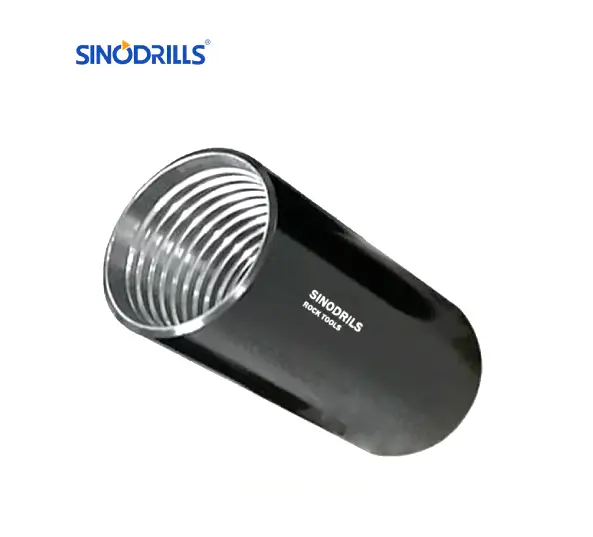
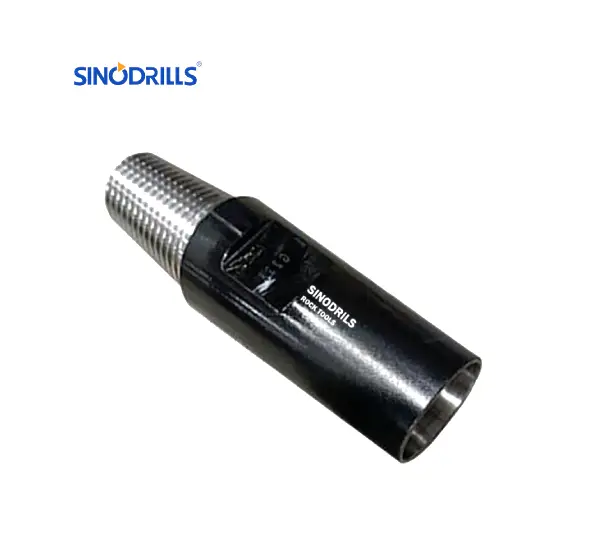
A DTH BOX to PIN Adapter is a specialized threaded component crucial in Down-The-Hole (DTH) drilling, designed to connect a DTH hammer to the drill rods, especially when different thread types are involved or when protecting the drill rig’s powerhead threads is necessary.
This adapter ensures the seamless transmission of both rotational torque and the powerful percussive energy generated by the DTH hammer down to the drill bit, facilitating efficient penetration through various rock formations.
It typically features a female (BOX) thread on one end and a male (PIN) thread on the other, allowing for versatile connections within the drill string assembly.
- Connects DTH Hammer to Drill Rods: Bridges the gap between the DTH hammer and the leading drill rod, enabling the entire drill string to be assembled.
- Thread Transition: Facilitates connections between components that have different thread types, providing flexibility in equipment usage.
- Powerhead Protection: Acts as a sacrificial component, protecting the more expensive threads of the drill rig’s powerhead from wear and damage during drilling.
- Efficient Energy Transfer: Engineered to robustly transmit the high percussive and rotational forces from the hammer through to the drill bit.
Common Types of Box to Pin Adapters
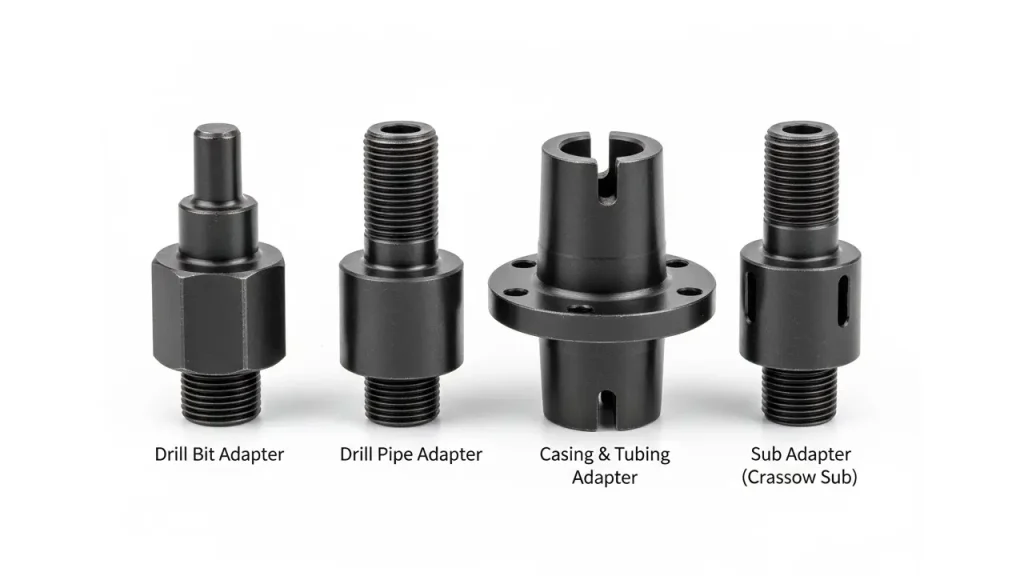
We manufacture and supply a variety of essential box-to-pin adapters for drilling applications. These components are vital for seamlessly connecting different parts of the drill string, ensuring operational continuity and versatility. Our adapters are crafted for reliable performance and are a key part of effective drilling.
Drill Bit Adapters: We offer specialized drill bit adapters designed to connect the drill bit to the drill stem or drilling rig components. These pieces are crucial for transmitting rotational force and weight to the bit, facilitating efficient drilling and hole creation. We ensure precise threading and robust material selection for maximum durability in challenging downhole conditions.
Drill Pipe Adapters: We provide rugged drill pipe adapters that allow for the connection of different sizes or types of drill pipe sections. This capability is essential for adjusting the length or configuration of the drill string as required by the drilling depth and formation. We utilize advanced manufacturing processes to produce strong, reliable connections for optimal torque and pressure handling.
Casing and Tubing Adapters: We supply a full line of casing and tubing adapters used to connect various components within the casing or tubing string, such as wellhead equipment or specialized tools. These adapters are crucial for maintaining well integrity and facilitating downhole operations. Our designs prioritize leak-proof sealing and resistance to internal and external stresses.
Sub Adapters: We produce a range of sub adapters, often referred to as crossover subs, which bridge the connection gap between components with differing thread types or sizes. These are indispensable in complex drilling programs where various tools and equipment must be integrated. We guarantee threading accuracy and material strength for dependable service in diverse drilling environments.
What is BOX to BOX in Drilling?
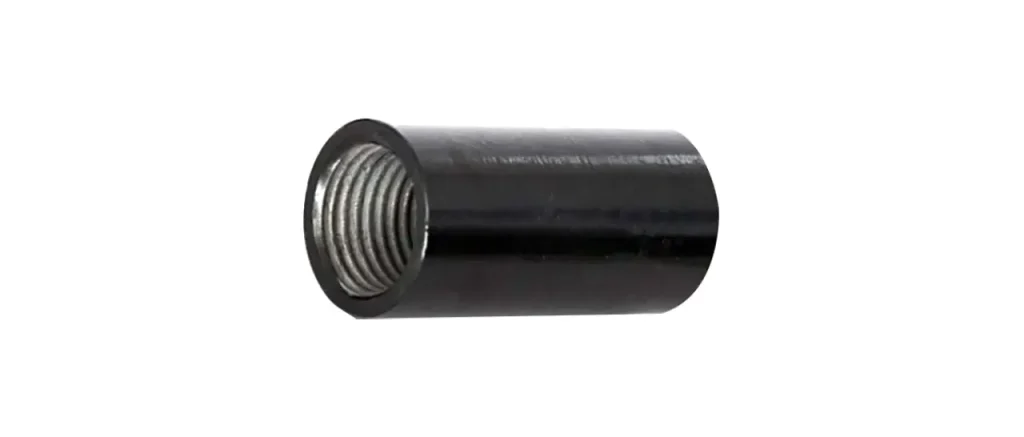
In drilling, “BOX to BOX” refers to a type of threaded connection where two components, both having a female (BOX) threaded end, are joined together. This is typically achieved using a short, double-male (PIN to PIN) adapter or sub that threads into both box ends.
While less common than the standard box-to-pin connection, BOX to BOX setups are used for specific configurations, such as connecting two sections of drill pipe that both terminate with a female thread, or for specialized tools that require this unique interface.
What is PIN to PIN in Drilling?
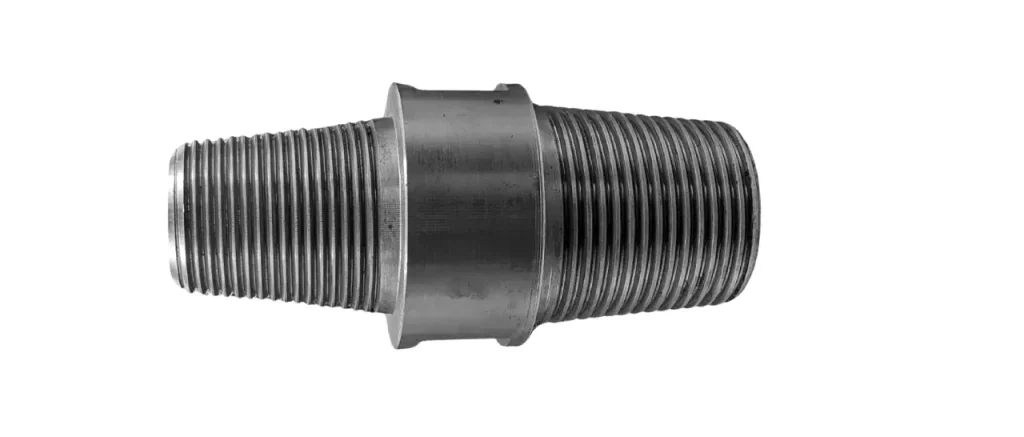
In drilling, “PIN to PIN” refers to a type of threaded connection where two components, both having a male (PIN) threaded end, are joined together. This connection requires a short, double-female (BOX to BOX) adapter or sub to link the two pin ends.
While less frequently encountered than the standard box-to-pin joint, PIN to PIN configurations are sometimes utilized in specific drilling setups, such as when connecting two tools that both terminate with a male thread, or for certain thread-saver applications where a double-box sub facilitates the connection.
What is BOX to PIN in Drilling?
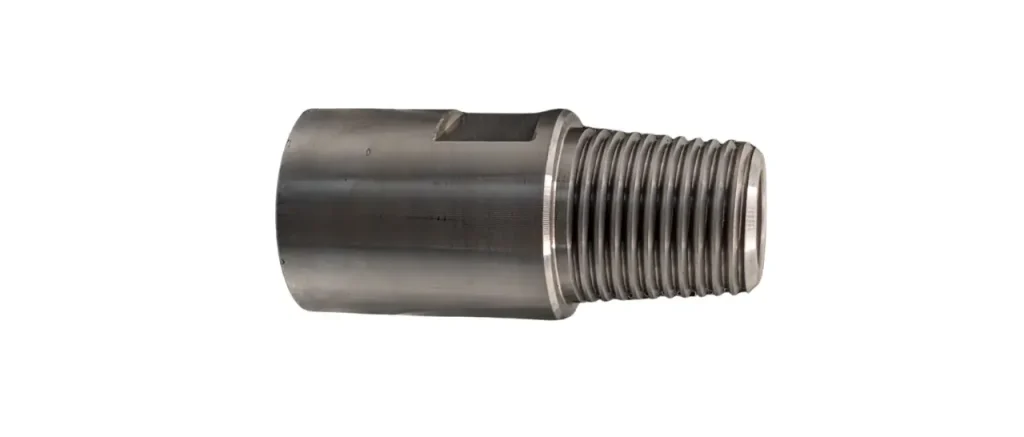
In drilling, “BOX to PIN” refers to the fundamental threaded connection system used to join two components of a drill string. It involves a male, externally threaded end (the “PIN”) screwing into a female, internally threaded end (the “BOX”).
This common and robust configuration ensures a secure, strong, and sealed joint that can efficiently transmit rotational torque, axial forces, and percussive impacts from the drill rig down to the drill bit.
BOX and PIN Applications in Drilling
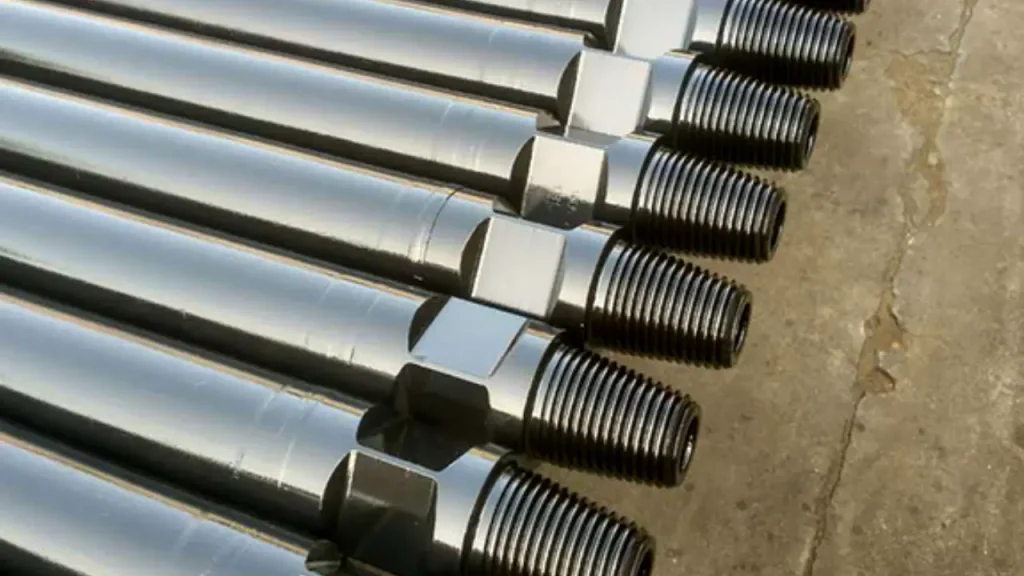
The BOX and PIN joint is ubiquitous across virtually all forms of drilling due to its fundamental role in creating a continuous and functional drill string. This robust threaded connection is essential for transmitting power, fluids, and forces from the surface drilling rig down to the drill bit at the bottom of the borehole.
Its applications span a wide range of industries and drilling methods, making it the standard for assembling the various components that make up the drill string.
- Connecting Drill Rods/Pipes: The most common application, extending the drill string to reach desired depths.
- Attaching Drill Collars: Used to add weight on bit and stabilize the drill string, typically with larger, stronger box and pin connections.
- Linking to Drill Bits: Connects the final drill string component to the cutting tool at the bottom of the hole.
- Integrating DTH Hammers: DTH hammers often have a box or pin connection to attach directly to drill rods or specific adapters.
- Incorporating Stabilizers and Reamers: These tools, crucial for maintaining borehole straightness and size, are connected via box and pin joints.
- Utilizing Adapters: Box and pin connections are key to adapters that bridge different thread types, sizes, or connect specialized tools into the drill string.
Conclusion
The Box and Pin connection, though seemingly simple, is the unsung hero guaranteeing the integrity and efficiency of your entire drill string. Its robust design ensures seamless power transmission, prevents costly breakdowns, and allows for the adaptable assembly of various drilling components. Mastering this fundamental concept is key to optimizing any drilling project.
Understanding the critical role of these threaded connections empowers you to make informed decisions about your drilling equipment, leading to smoother operations and increased productivity. It underscores the precision engineering required for every component that delves beneath the earth’s surface.
For reliable Box to Pin adapters and other essential drilling components, look no further. You can get wholesale Box to Pin adapters directly from Sinodrills, your trusted partner for premium drilling solutions from China.