
Hollow bar micropiles are advanced deep foundation elements designed for challenging ground conditions and restricted access sites. By combining drilling, grouting, and reinforcement into a single efficient process, they provide reliable load-bearing support. Their versatility makes them popular in underpinning, slope stabilization, and infrastructure strengthening projects worldwide.
Unlike conventional piling systems, hollow bar micropiles use a sacrificial drill bit and a threaded hollow steel bar that allows continuous grout injection during drilling. This method improves bond strength and installation speed. Engineers value them for precision, reduced vibration, and dependable performance in unstable or water-bearing soils.
What is Hollow Bar Micropile?
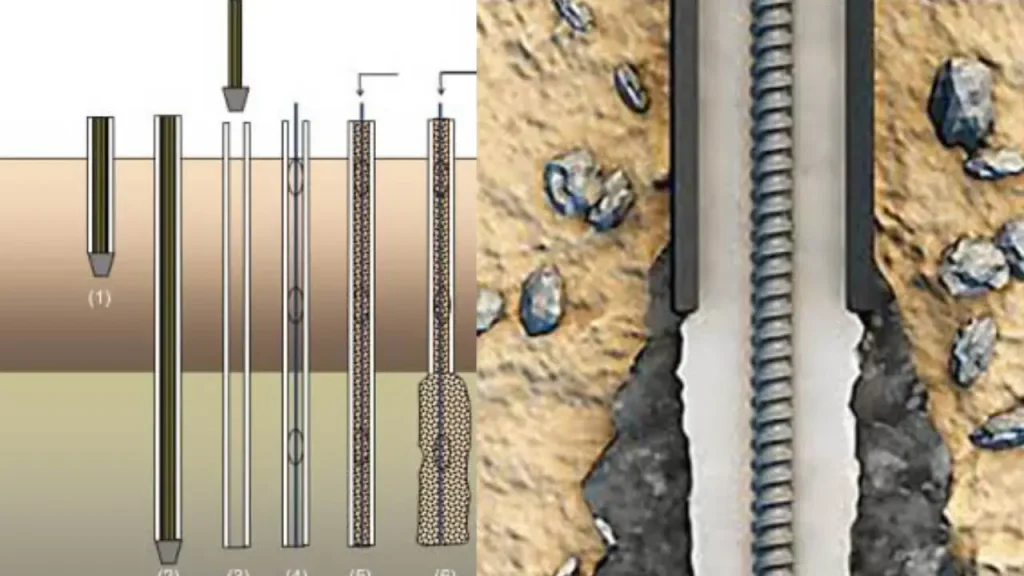
A hollow bar micropile is a small-diameter, high-capacity deep foundation element made from a threaded hollow steel bar that serves as both the drill rod and reinforcement.
During installation, grout is pumped through the hollow center as drilling progresses, creating a strong bond with surrounding soil or rock. This combined drilling and grouting process makes it efficient for underpinning, slope stabilization, and restricted-access projects.
What is Hollow Bar Micropile Made of?
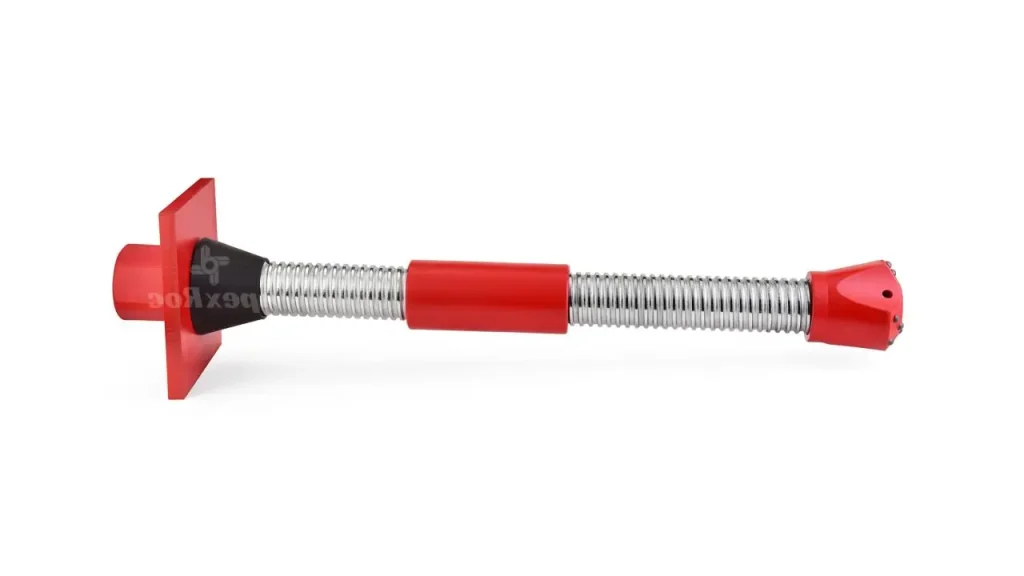
Hollow bar micropiles are engineered foundation elements designed to combine drilling, grouting, and reinforcement in a single integrated system. Their material composition ensures strength, durability, and efficient load transfer in demanding soil and rock conditions. Each component contributes to structural stability, corrosion protection, and long-term performance in challenging construction environments.
- Hollow Threaded Steel Bar – The main structural element is a high-strength, fully threaded hollow steel bar that acts as both the drill rod and permanent reinforcement. Its continuous threading allows easy coupling and depth extension, while the hollow core enables simultaneous grout injection, enhancing bond strength and overall pile capacity.
- Sacrificial Drill Bit – A hardened steel drill bit is fixed to the leading end of the bar to penetrate soil, rock, or mixed ground layers. It remains embedded after installation and is selected based on ground conditions to ensure efficient drilling performance and proper grout distribution at the pile tip.
- Cement Grout – Cement-based grout is pumped through the hollow center during drilling, filling voids and bonding the steel bar to the surrounding ground. Once hardened, it forms a solid grout column that transfers structural loads effectively and provides additional corrosion protection to the reinforcement.
- Couplers and Accessories – Threaded couplers connect bar sections to reach required depths, while plates, nuts, and centralizers secure alignment and structural connection to the supported foundation. These accessories ensure stable installation, reliable load transfer, and adaptability to varying project specifications and site constraints.
Hollow Bar Micropile Applications
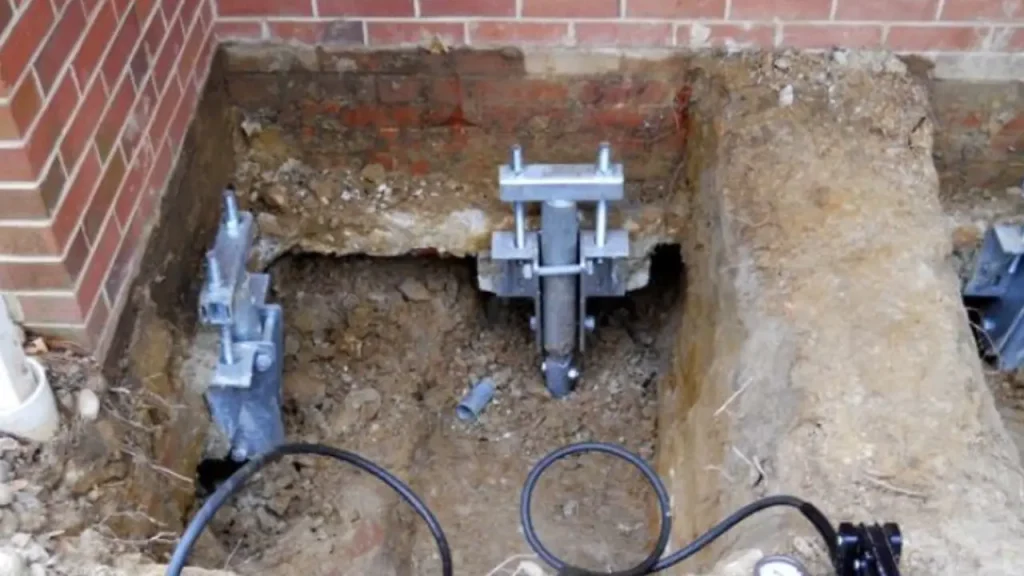
Hollow bar micropiles are widely used in geotechnical and structural engineering projects where space is limited or ground conditions are complex. Their combined drilling and grouting method allows efficient installation with minimal vibration.
Because of their adaptability, they serve multiple functions in foundation support, ground stabilization, and structural reinforcement applications.
- Foundation Underpinning – Hollow bar micropiles are commonly used to strengthen or repair existing foundations that have settled or require increased load capacity. Their small diameter allows installation in restricted spaces such as basements or urban areas, while continuous grouting ensures strong bonding with surrounding soils for reliable structural support.
- Slope Stabilization – In unstable slopes or embankments, hollow bar micropiles act as reinforcing elements that improve ground stability and prevent landslides. Installed at designed angles, they create a reinforced soil mass capable of resisting shear forces, making them effective for highways, railways, and hillside construction projects.
- Retaining Structures – These micropiles are frequently integrated into retaining walls to provide additional anchoring and structural resistance. Their ability to transfer tensile and compressive loads makes them suitable for supporting excavation works, particularly in tight urban environments where traditional anchor systems may be difficult to install.
- Bridge and Infrastructure Support – Hollow bar micropiles are used in bridge abutments, columns, and infrastructure upgrades where deeper load transfer is required. They perform well in variable soil conditions and can be installed around existing structures, helping extend service life and improve structural performance without major disruption.
- Seismic Retrofitting – In earthquake-prone regions, hollow bar micropiles enhance foundation resilience by increasing bearing capacity and improving ground-structure interaction. Their reinforced grout column provides additional stiffness and load distribution, making them a practical solution for upgrading buildings and infrastructure to meet modern seismic standards.
How to Choose Hollow Bar Micropiles
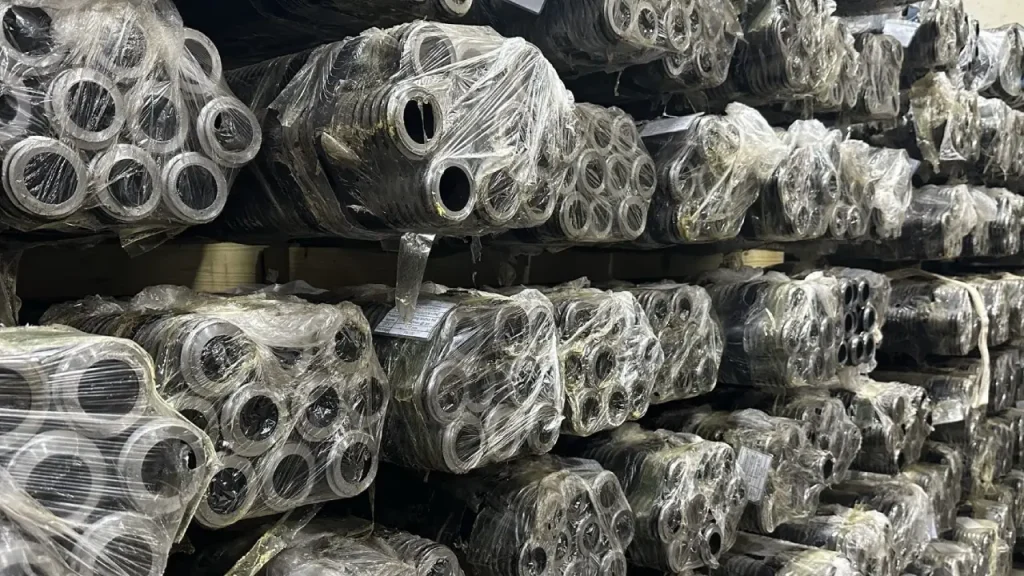
Selecting the right hollow bar micropile system requires careful evaluation of soil conditions, structural demands, and project constraints. Because these elements serve both as reinforcement and load transfer components, proper specification is essential for safety and long-term performance. Understanding technical parameters and site requirements helps ensure efficient installation and dependable foundation support.
- Assess Ground Conditions – Conduct a detailed geotechnical investigation to determine soil type, rock layers, groundwater presence, and bearing capacity. These factors influence bar diameter, drill bit selection, and grout design. Matching the micropile system to actual ground conditions ensures effective penetration, proper bonding, and reliable structural performance.
- Determine Load Requirements – Calculate the required compressive, tensile, or lateral load capacity based on structural design. The bar grade, diameter, and grout strength must meet engineering specifications. Choosing a micropile system with sufficient load-bearing capacity prevents settlement issues and ensures long-term stability under service conditions.
- Select Appropriate Drill Bit Type – Different ground formations require specific sacrificial drill bits, such as clay bits, rock bits, or mixed-ground designs. Proper bit selection improves drilling efficiency, reduces installation time, and ensures optimal grout flow at the pile tip, directly affecting bond strength and performance.
- Consider Corrosion Protection – For aggressive soil environments or long design life projects, enhanced corrosion protection may be necessary. Options include thicker grout cover, galvanized bars, or additional protective coatings. Addressing corrosion risks early increases durability and reduces maintenance or replacement costs over time.
- Evaluate Installation Equipment and Access – Review site access limitations, headroom restrictions, and available drilling equipment before finalizing specifications. Hollow bar micropiles are ideal for confined spaces, but compatibility with machinery and project logistics ensures smooth installation, reduced delays, and consistent construction quality.
Conclusion
Hollow bar micropiles offer an efficient and adaptable solution for modern geotechnical challenges. Their combined drilling and grouting system enhances structural capacity while simplifying installation steps. Whether used in urban renovation or complex infrastructure works, they deliver dependable reinforcement where traditional piling methods may struggle to perform effectively.
By understanding their structure, installation process, and key advantages, project managers can make informed foundation decisions. Hollow bar micropiles reduce construction risks, minimize site disruption, and improve long-term stability. Their flexibility across soil types and site constraints makes them a practical choice for demanding engineering environments.
For reliable performance, selecting the right drilling tools is essential. At Sinodrills, we supply wholesale micropile drilling tools engineered for strength, precision, and durability. From hollow bars to drill bits and accessories, our solutions support efficient installation and consistent project results across various ground conditions.