
Understanding ground stabilization techniques is essential for construction, mining, and civil engineering projects. Soil nails and shotcrete are two widely used methods, each offering unique advantages. While soil nailing reinforces soil internally with steel bars, shotcrete provides a protective concrete layer. Choosing the right method depends on site conditions and project goals.
Both methods improve slope and wall stability, reduce erosion, and prevent structural failure. Soil nailing allows controlled deformation and long-term reinforcement, while shotcrete offers immediate surface support. By comparing their principles, applications, and performance, engineers can make informed decisions for safe, cost-effective, and durable ground stabilization solutions.
What are Soil Nails?
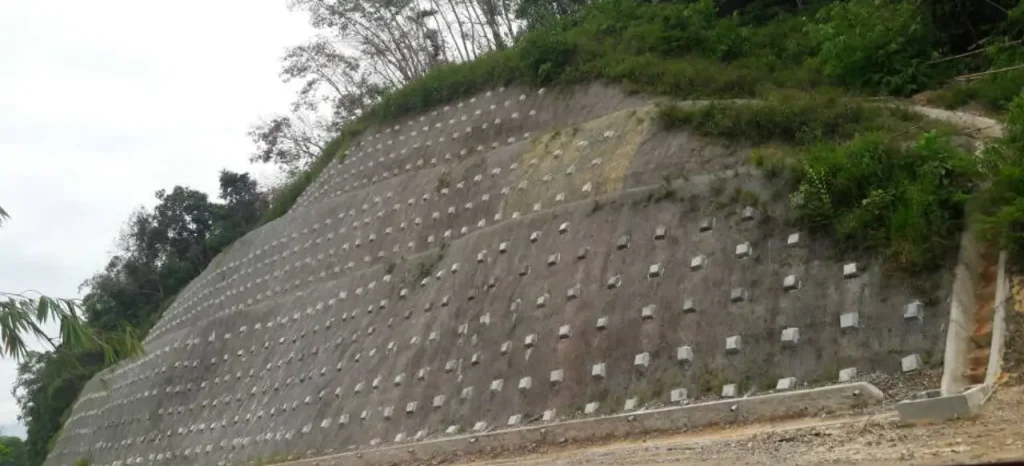
Soil nails are steel bars or rods inserted and grouted into existing soil to reinforce and stabilize slopes, excavations, or retaining walls. They create a composite soil-nail structure that increases shear strength, controls deformation, and prevents soil failure, providing a cost-effective and flexible solution for ground stabilization in various construction projects.
Soil nailing is widely used to stabilize slopes, excavations, and retaining walls in construction, mining, and civil engineering projects. By reinforcing the soil internally with steel bars, soil nailing improves slope stability, prevents soil failure, and provides a flexible, cost-effective solution for projects requiring safe and durable ground support.
- Slope Stabilization – Soil nailing strengthens natural or man-made slopes to prevent landslides and erosion. We design and install nails at strategic spacing and depth, creating a composite soil structure that resists lateral movement and improves long-term slope stability.
- Excavation Support – In deep excavations, soil nails provide internal reinforcement to retain soil and protect surrounding structures. We integrate soil nails with shotcrete facing or anchors, ensuring safe excavation walls and reducing the risk of collapse during construction activities.
- Retaining Walls – Soil nailing reinforces retaining walls by improving soil strength behind the wall. We design nail placement and grouting to create a stable composite mass, reducing wall deformation, preventing sliding, and extending the structure’s lifespan.
- Road and Highway Embankments – Soil nails stabilize road cuts and highway embankments exposed to traffic and weather loads. We optimize nail patterns and depth to maintain slope integrity, prevent settlement, and enhance safety along transportation routes.
- Bridge Abutments and Foundations – Soil nailing supports bridge abutments, deep foundations, and other civil structures built on weak or loose soils. We implement nails to control lateral soil movement, maintain alignment, and ensure structural stability for long-term performance.
What is Shotcrete?
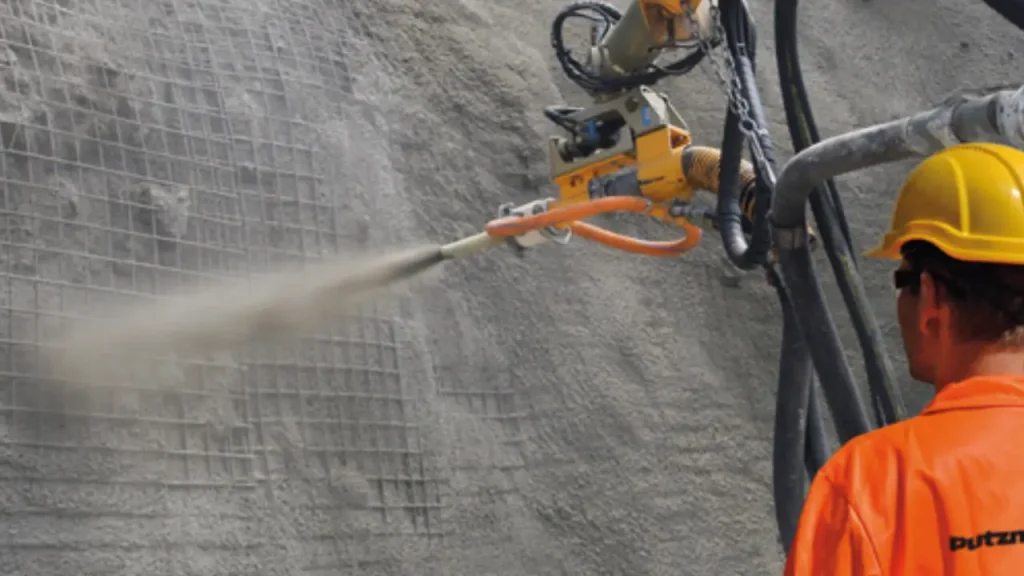
Shotcrete is a method of applying concrete or mortar at high velocity onto soil, rock, or structural surfaces. It forms a dense, protective layer that provides immediate support, prevents erosion, and increases stability. Shotcrete is widely used in tunnels, retaining walls, slopes, and other construction projects requiring rapid ground reinforcement.
Shotcrete is widely used in tunnels, retaining walls, and excavations where rapid stabilization and surface protection are required.
- Tunnel Support – Shotcrete is applied to tunnel walls and ceilings to provide immediate structural support. We ensure uniform coverage, proper thickness, and reinforcement placement, reducing the risk of rock falls, improving safety, and maintaining tunnel stability during excavation.
- Slope Stabilization – For unstable slopes or embankments, shotcrete forms a protective layer that resists erosion and lateral movement. We apply it with or without reinforcement depending on site conditions, ensuring long-term stability and effective surface protection.
- Retaining Walls – Shotcrete reinforces retaining walls by adding a rigid concrete layer to the soil-facing surface. We control application thickness, curing, and reinforcement to improve load-bearing capacity, reduce cracking, and extend wall service life.
- Excavation Protection – Shotcrete provides temporary or permanent support for deep excavations, preventing soil collapse and surface erosion. We apply it quickly to exposed faces, ensuring safety and structural integrity throughout the construction process.
- Swimming Pools and Architectural Structures – Beyond soil stabilization, shotcrete is used in pool construction and complex architectural forms. We tailor mix designs, spraying techniques, and reinforcement to achieve precise shapes, durability, and long-lasting structural performance.
Soil Nails vs Shotcrete
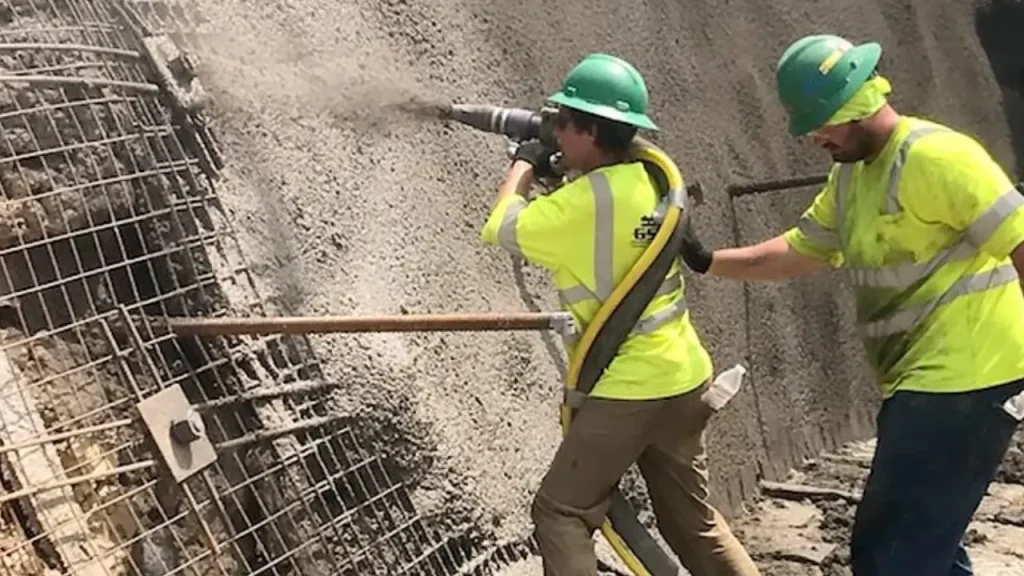
Soil nails and shotcrete are both common ground stabilization methods, but they differ in design, application, and load transfer. Soil nails reinforce the soil internally using steel bars, while shotcrete provides a concrete layer sprayed onto surfaces. Understanding their differences helps engineers choose the best solution for slope and wall stabilization.
1. Method of Reinforcement
Soil Nail: Soil nails work by inserting steel rods into the soil and grouting them in place. This creates a composite soil-nail mass that improves strength, controls deformation, and prevents soil failure.
Shotcrete: Shotcrete is applied by spraying concrete or mortar at high velocity onto the soil or rock surface. It immediately forms a rigid protective layer that resists surface erosion and lateral movement, providing instant support.
2. Load Transfer
Soil Nails: Soil nails transfer loads from the soil through friction and shear along the nail-soil interface. This method relies on passive resistance and allows the reinforced soil to deform slightly while maintaining stability.
Shotcrete: Shotcrete primarily carries compressive loads through its rigid concrete layer. It resists lateral soil pressure by creating a continuous surface, reducing movement, and providing immediate structural support to slopes and retaining walls.
3. Flexibility and Adaptability
Soil Nails: Soil nails adapt to uneven or variable soil conditions. Their flexibility allows minor soil deformation without cracking, making them ideal for irregular slopes or excavations.
Shotcrete: Shotcrete is rigid and provides uniform coverage. While it can conform to surface shapes, it is less tolerant to differential settlement and may require reinforcement to handle stress concentrations in uneven terrain.
4. Construction Speed
Soil Nails: Installing soil nails involves drilling, inserting, and grouting rods. This process requires careful planning and execution but can be staged to match excavation progress efficiently.
Shotcrete: Shotcrete can be applied quickly to surfaces, providing immediate support. However, proper curing, thickness control, and reinforcement may require additional time and careful handling to achieve long-term durability.
5. Cost Considerations
Soil Nails: Soil nailing typically involves lower material costs but requires skilled labor for precise installation and grouting. Maintenance is generally minimal if designed correctly.
Shotcrete: Shotcrete may have higher material and equipment costs, particularly when reinforcement or additives are needed. However, it offers rapid surface protection, which can reduce overall project delays.
Here are some differences between soil nailing and shotcrete as follows:
| Aspect | Soil Nails | Shotcrete |
|---|---|---|
| Method | Steel bars grouted into soil | Concrete sprayed onto surface |
| Load Transfer | Friction and shear along nails | Compressive strength of concrete |
| Flexibility | Adapts to soil deformation | Rigid, less tolerant to uneven settlement |
| Construction Speed | Gradual, staged with drilling | Fast application, immediate support |
| Cost | Lower materials, skilled labor needed | Higher materials and equipment costs |
How to Choose Soil Nails and Shotcrete?
Choosing between soil nails and shotcrete requires evaluating site conditions, project goals, and stabilization needs. Each method offers unique benefits: soil nails provide internal reinforcement with flexibility, while shotcrete delivers immediate surface support.
Selecting the right solution ensures slope and wall stability, reduces risks, and optimizes construction efficiency.
- Assess Soil Conditions – Evaluate soil type, strength, and moisture content before choosing a method. We analyze geotechnical data to determine whether soil nails can provide adequate reinforcement or if shotcrete is needed for surface protection, ensuring long-term stability and safe construction.
- Consider Slope and Wall Geometry – The shape, height, and angle of slopes or retaining walls influence method selection. We recommend soil nails for irregular, deep, or steep slopes and shotcrete for uniform surfaces needing immediate support, optimizing reinforcement effectiveness.
- Load and Stress Requirements – Determine the expected loads and earth pressures acting on the slope or wall. We design soil nail patterns and shotcrete thickness according to resist shear, lateral, and compressive forces, ensuring structural integrity and minimizing deformation.
- Construction Timeline – The project schedule may dictate method choice. We choose shotcrete for rapid surface stabilization and soil nails for staged excavation projects, balancing construction speed with safety, cost, and long-term performance considerations.
- Cost and Maintenance Considerations – Budget and maintenance requirements play a key role. We evaluate material costs, labor, and long-term upkeep to select soil nails or shotcrete, ensuring the solution is cost-effective while maintaining durability and minimizing future repair needs.
Conclusion
Selecting the right ground stabilization method ensures project safety and efficiency. Soil nailing and shotcrete each provide unique benefits tailored to specific site conditions. By understanding their differences, construction teams can optimize slope reinforcement, excavation support, and wall stability while reducing maintenance and long-term risks for any engineering project.
Proper installation and design are crucial for both soil nails and shotcrete systems. Soil nails rely on precise placement, grouting, and load transfer, while shotcrete requires careful application and curing. Ensuring quality in both methods enhances durability, minimizes deformation, and delivers reliable protection for slopes, retaining walls, and excavation sites.
For successful implementation, having the right drilling tools is essential. Get wholesale, durable, and precision-engineered drilling equipment from our Sinodrills. We provide high-performance rods, drill bits, and accessories to support soil nailing and shotcrete projects, ensuring smooth operations, optimal stability, and efficient ground reinforcement for construction and civil engineering applications.