
Button bit wear patterns directly affect drilling performance, penetration rate, hole quality, and operating costs. Understanding how different wear types develop helps drilling professionals identify problems early, improve maintenance practices, and maximize the service life of valuable drilling tools in mining, quarrying, tunneling, and construction applications.
Different geological formations, drilling parameters, and equipment conditions create unique wear patterns on button drill bits. This guide explains the most common types of wear, their causes, inspection methods, prevention strategies, and practical maintenance tips to help you achieve greater drilling efficiency and lower overall operating expenses.
What are Button Bit Wear Patterns?
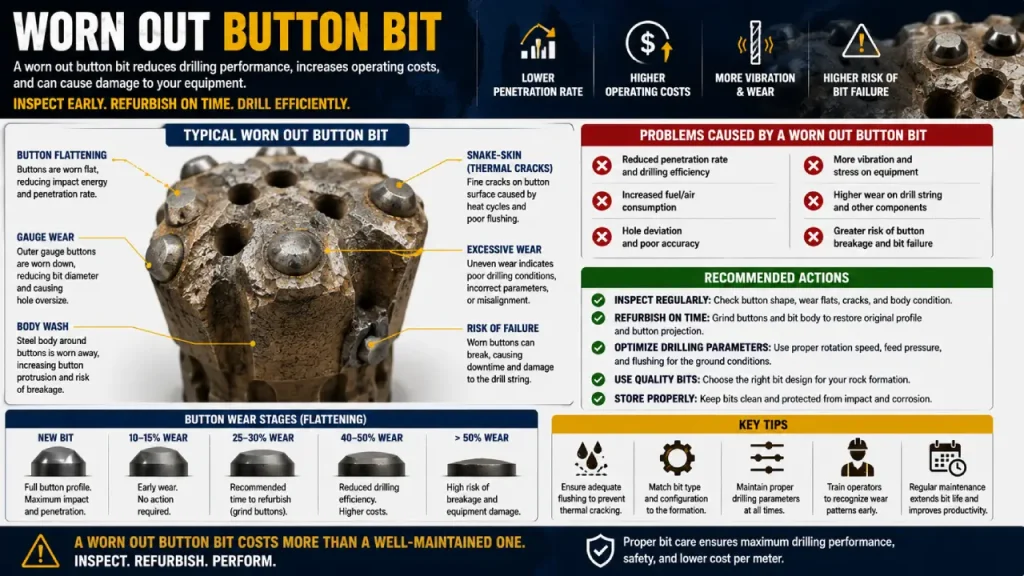
Button bit wear patterns are the visible signs of material loss, deformation, or damage that develop on a button drill bit during drilling operations.
These button drill bit patterns reveal how the bit has interacted with the rock formation and whether drilling conditions, operating parameters, or maintenance practices are affecting its performance. Identifying wear patterns helps operators evaluate bit condition and determine the appropriate maintenance or replacement schedule.
Types of Button Bit Wear Patterns
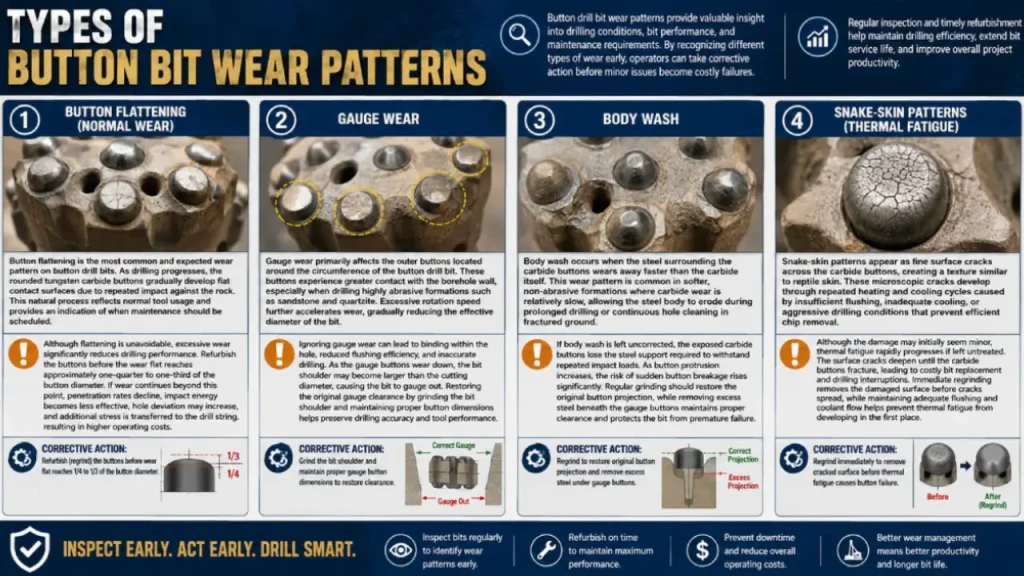
Button drill bit wear patterns provide valuable insight into drilling conditions, bit performance, and maintenance requirements. By recognizing different types of wear early, operators can take corrective action before minor issues become costly failures.
Regular inspection and timely refurbishment help maintain drilling efficiency, extend bit service life, and improve overall project productivity.
Button Flattening (Normal Wear)
Button flattening is the most common and expected wear pattern on button drill bits. As drilling progresses, the rounded tungsten carbide buttons gradually develop flat contact surfaces due to repeated impact against the rock. This natural process reflects normal tool usage and provides an indication of when maintenance should be scheduled.
Although flattening is unavoidable, excessive wear significantly reduces drilling performance. Refurbish the buttons before the wear flat reaches approximately one-quarter to one-third of the button diameter. If wear continues beyond this point, penetration rates decline, impact energy becomes less effective, hole deviation may increase, and additional stress is transferred to the drill string, resulting in higher operating costs.
Gauge Wear
Gauge wear primarily affects the outer buttons located around the circumference of the button drill bit. These buttons experience greater contact with the borehole wall, especially when drilling highly abrasive formations such as sandstone and quartzite. Excessive rotation speed further accelerates wear, gradually reducing the effective diameter of the bit.
Ignoring gauge wear can lead to binding within the hole, reduced flushing efficiency, and inaccurate drilling. As the gauge buttons wear down, the bit shoulder may become larger than the cutting diameter, causing the bit to gauge out. Restoring the original gauge clearance by grinding the bit shoulder and maintaining proper button dimensions helps preserve drilling accuracy and tool performance.
Body Wash
Body wash occurs when the steel surrounding the carbide buttons wears away faster than the carbide itself. This wear pattern is common in softer, non-abrasive formations where carbide wear is relatively slow, allowing the steel body to erode during prolonged drilling or continuous hole cleaning in fractured ground.
If body wash is left uncorrected, the exposed carbide buttons lose the steel support required to withstand repeated impact loads. As button protrusion increases, the risk of sudden button breakage rises significantly. Regular grinding should restore the original button projection, while removing excess steel beneath the gauge buttons maintains proper clearance and protects the bit from premature failure.
Snake-Skin Patterns (Thermal Fatigue)
Snake-skin patterns appear as fine surface cracks across the carbide buttons, creating a texture similar to reptile skin. These microscopic cracks develop through repeated heating and cooling cycles caused by insufficient flushing, inadequate cooling, or aggressive drilling conditions that prevent efficient chip removal.
Although the damage may initially seem minor, thermal fatigue rapidly progresses if left untreated. The surface cracks deepen until the carbide buttons fracture, leading to costly bit replacement and drilling interruptions. Immediate regrinding removes the damaged surface before cracks spread, while maintaining adequate flushing and coolant flow helps prevent thermal fatigue from developing in the first place.
Why Do Button Bit Wear Patterns Matter?
Button drill bit wear patterns provide valuable insight into drilling conditions, bit performance, and maintenance requirements. By recognizing different types of wear early, operators can take corrective action before minor issues become costly failures.
Regular inspection and timely refurbishment help maintain drilling efficiency, extend bit service life, and improve overall project productivity.
- Improve Drilling Efficiency – Identifying wear patterns early allows operators to maintain sharp, properly shaped buttons that transfer impact energy efficiently into the rock. Well-maintained button drill bits achieve faster penetration rates, produce cleaner holes, reduce vibration, and improve overall drilling productivity while minimizing unnecessary energy consumption.
- Extend Button Drill Bit Service Life – Regular wear inspections help determine the ideal time for regrinding before excessive damage occurs. Preventive maintenance protects carbide buttons and the bit body from irreversible wear, extending the usable life of each button drill bit and reducing the frequency of costly replacements.
- Reduce Equipment Wear – Excessively worn button bits transfer greater impact loads back through the drill string instead of efficiently breaking rock. Timely refurbishment minimizes stress on drill rods, shank adapters, couplings, and rock drills, reducing component fatigue, maintenance requirements, and unexpected equipment failures.
- Maintain Hole Accuracy – Wear patterns such as gauge wear or uneven button flattening can cause hole deviation and oversized or undersized boreholes. Monitoring these conditions helps maintain proper bit geometry, ensuring straighter holes, improved drilling precision, and better alignment for blasting, anchoring, or foundation applications.
- Lower Overall Drilling Costs – Properly maintained button drill bits consume less energy, drill faster, require fewer replacements, and reduce machine downtime. Understanding wear patterns enables proactive maintenance decisions that improve operational efficiency, increase return on investment, and lower the total cost of drilling projects over the long term.
What to Do with Worn Button Bits?

Worn button bits should never be ignored, as continued use can reduce drilling efficiency, increase operating costs, and damage drilling equipment. Proper inspection, maintenance, and replacement practices help maximize tool life while ensuring safe and productive drilling operations in mining, tunneling, quarrying, and construction projects.
- Inspect the Wear Condition: Carefully examine the button bit for worn carbide buttons, cracked skirts, broken inserts, uneven wear, or excessive body erosion. Regular inspections help determine whether the bit can be reground, requires repair, or should be replaced before it negatively affects drilling speed, hole quality, and equipment performance.
- Regrind the Carbide Buttons: If the carbide buttons are worn but remain structurally sound, professional regrinding restores their original profile and cutting efficiency. Timely button grinding extends service life, improves penetration rates, reduces drilling vibration, and prevents accelerated wear caused by flattened carbide surfaces.
- Replace Severely Damaged Bits: When carbide buttons are missing, cracked, or excessively worn, replacement is the safest and most economical solution. Continuing to use heavily damaged button bits can reduce drilling accuracy, increase fuel consumption, overload the rock drill, and shorten the lifespan of other drilling components.
- Recycle Used Button Bits: Many worn button bits are manufactured from valuable alloy steel and tungsten carbide, making them suitable for recycling. Recycling helps recover raw materials, lowers environmental impact, reduces industrial waste, and supports sustainable drilling practices while minimizing disposal costs for drilling contractors.
- Improve Drilling Practices: Analyze why the button bit wore prematurely by reviewing drilling parameters, rock conditions, flushing efficiency, rotation speed, feed pressure, and operator techniques. Optimizing these factors reduces unnecessary wear, extends button bit lifespan, improves productivity, and lowers the overall cost per drilled meter.
- Store Spare Button Bits Properly: Keep replacement button bits in a clean, dry storage area protected from moisture, dirt, and physical impacts. Proper storage prevents corrosion, thread damage, and contamination, ensuring each bit is ready for immediate use and delivers reliable drilling performance when installed.
Conclusion
Recognizing button bit wear patterns is essential for maintaining consistent drilling performance and avoiding unnecessary downtime. Regular inspection, timely regrinding, and proper drilling practices help extend bit life while improving penetration rates, reducing equipment stress, and lowering the total cost of drilling operations across various rock formations.
Selecting high-quality button drill bits is equally important for achieving reliable results in demanding environments. Durable materials, precision manufacturing, and proper heat treatment contribute to better wear resistance and longer service life, allowing drilling contractors to complete projects more efficiently while minimizing replacement frequency and maintenance costs.
If you are looking for dependable wholesale button drill bits, Sinodrills offers a comprehensive range of solutions designed for mining, quarrying, tunneling, foundation drilling, and construction projects. Our experienced team provides quality products, competitive pricing, and professional support to help you maximize drilling productivity and long-term value.