
Civil Engineering is the backbone of modern society, responsible for the roads, bridges, and buildings that define our world. But before the concrete is poured or the steel is erected, a less glamorous but absolutely critical tool must do its job: the drill bit. It’s the silent hero that prepares the ground for every great structure.
The foundation’s success hinges entirely on the information gathered beneath the surface and the stability achieved through proper earthwork. A subpar or incorrect drill bit can compromise site investigation and even impact the integrity of a structure’s eventual foundation. Understanding these crucial tools is paramount for any successful civil project.
What is Civil Engineering?
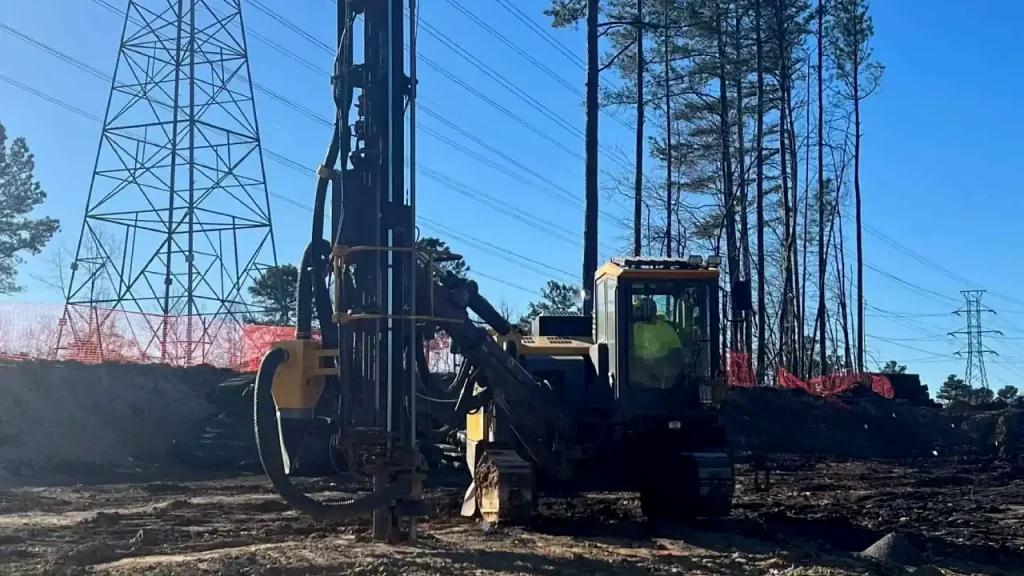
Civil Engineering is a broad professional discipline that involves the planning, design, construction, and maintenance of the physical and naturally built environment.
This encompasses a vast array of public and private infrastructure, including major projects like roads, bridges, railways, dams, airports, water supply systems, and foundational structures for buildings.
Civil engineers utilize scientific and technical principles to ensure that these complex systems are safe, sustainable, and functional for public use, often specializing in sub-disciplines like structural, geotechnical, transportation, or environmental engineering.
Drill Bits for Civil Engineering
Recommended Civil Engineering Drill Bits
Civil Engineering is the backbone of modern society, responsible for the roads, bridges, and buildings that define our world. But before the concrete is poured or the steel is erected, a less glamorous but absolutely critical tool must do its job: the drill bit. It’s the silent hero that prepares the ground for every great structure.
The foundation’s success hinges entirely on the information gathered beneath the surface and the stability achieved through proper earthwork. A subpar or incorrect drill bit can compromise site investigation and even impact the integrity of a structure’s eventual foundation. Understanding these crucial tools is paramount for any successful civil project.
Core Drill Bits
Core drill bits are cylindrical tools designed to cut an annular ring, leaving a solid column of rock or soil—the “core”—intact in the center. This is crucial for geotechnical engineers who need undisturbed samples to analyze the ground’s composition, strength, and water content.
These drill bits utilize diamond-impregnated segments for cutting through hard materials like concrete, asphalt, and rock. The extracted core sample provides invaluable data, informing the final structural design and ensuring the foundation is appropriately engineered for the specific site conditions.
Rotary Roller Cone Drill Bits
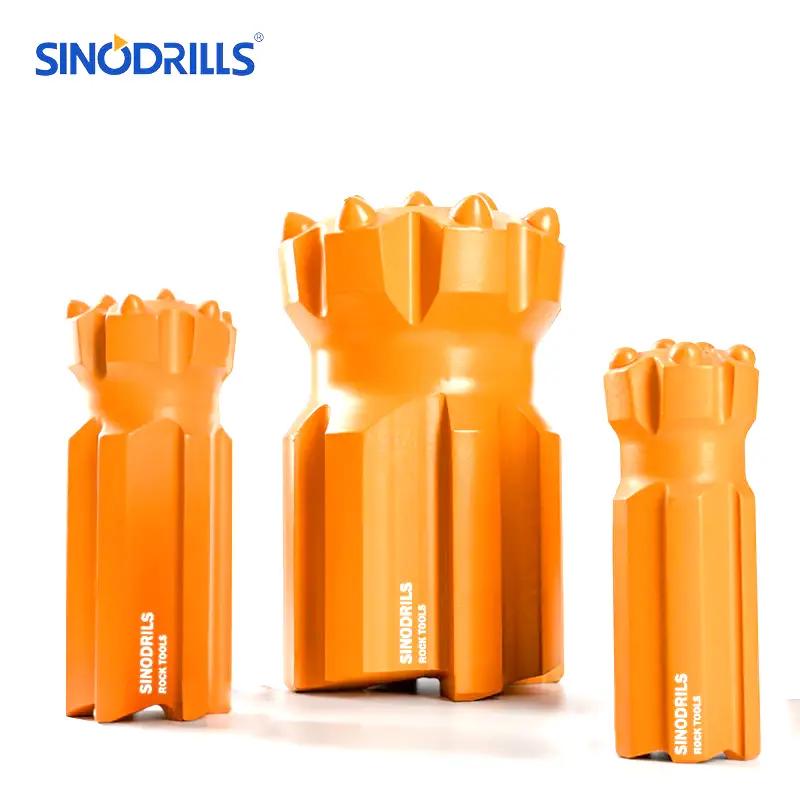
Rotary roller cone drill bits have two or more rotating cones with hardened steel teeth or tungsten carbide inserts. They work by a crushing and shearing action as they are pressed into the formation and spun, primarily used for large-diameter drilling in softer to medium-hard rock.
They are widely employed for drilling large-diameter boreholes for deep foundations, such as piling and caissons, where speed and penetration rate are prioritized over sample quality. The design allows for continuous, efficient hole creation through various strata to reach competent bearing layers.
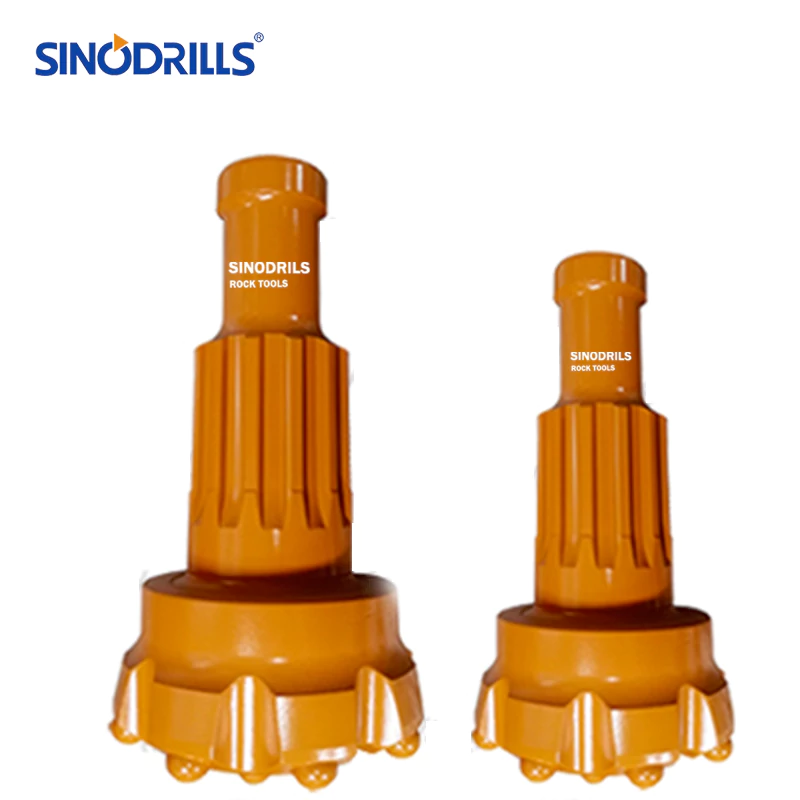
Down-The-Hole (DTH) Hammer Drill Bits
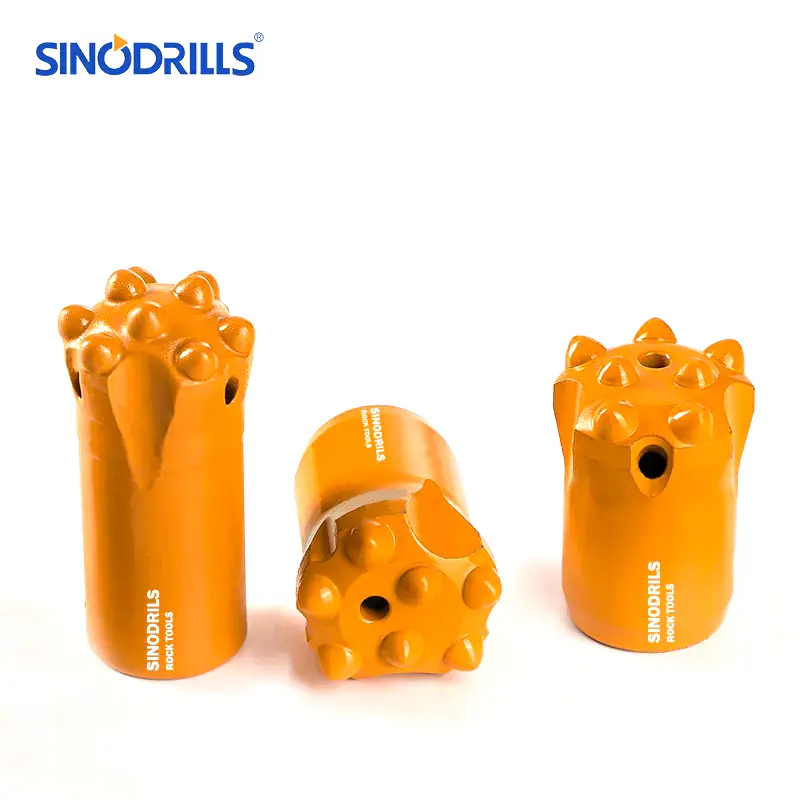
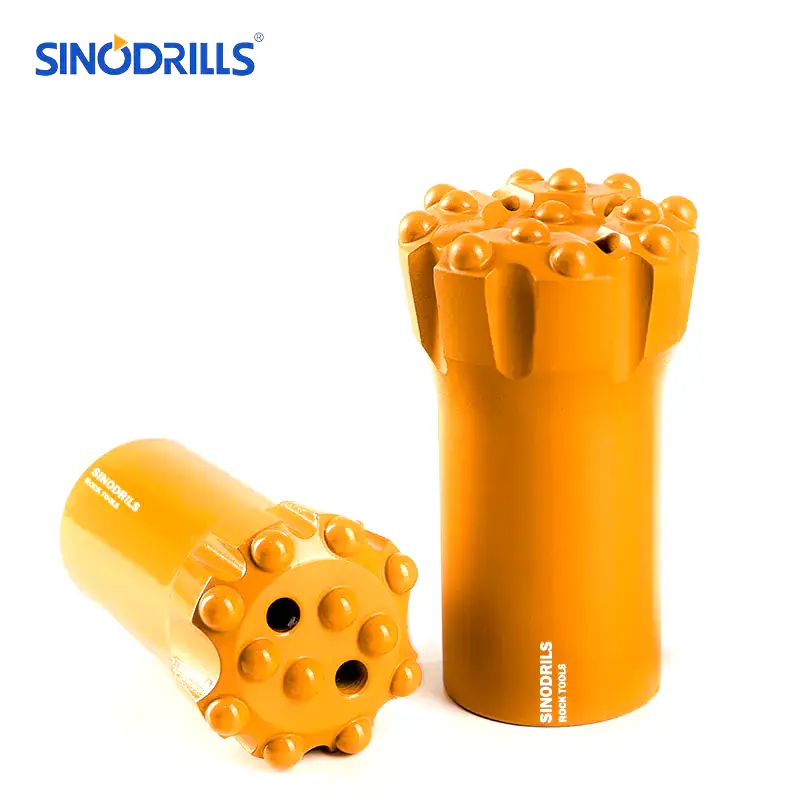
DTH hammer drill bits use a percussive mechanism, where a pneumatic or hydraulic hammer drives the bit repeatedly against the rock, pulverizing it. This system excels in hard, massive rock formations where rotary drilling is too slow or inefficient, offering high penetration rates.
These powerful drill bits are critical for anchoring and grouting projects, as well as blast-hole drilling in quarrying and tunneling operations. The constant hammering action allows civil engineers to reliably create straight and precise holes deep into the bedrock.
Auger Drill Bits
Auger drill bits are helical screws used to bore holes in relatively soft ground, soil, clay, and loose sediments. They work by rotating to cut and collect the loosened material, which is then lifted out of the borehole along the screw flights. They are efficient for shallow to medium depths.
They are commonly used for general earth drilling tasks, including utility pole installation, soil testing, and creating holes for cast-in-place concrete piers. Their ability to cleanly bring spoils to the surface makes them suitable for environmental and smaller-scale foundation work.
Drag Drill Bits
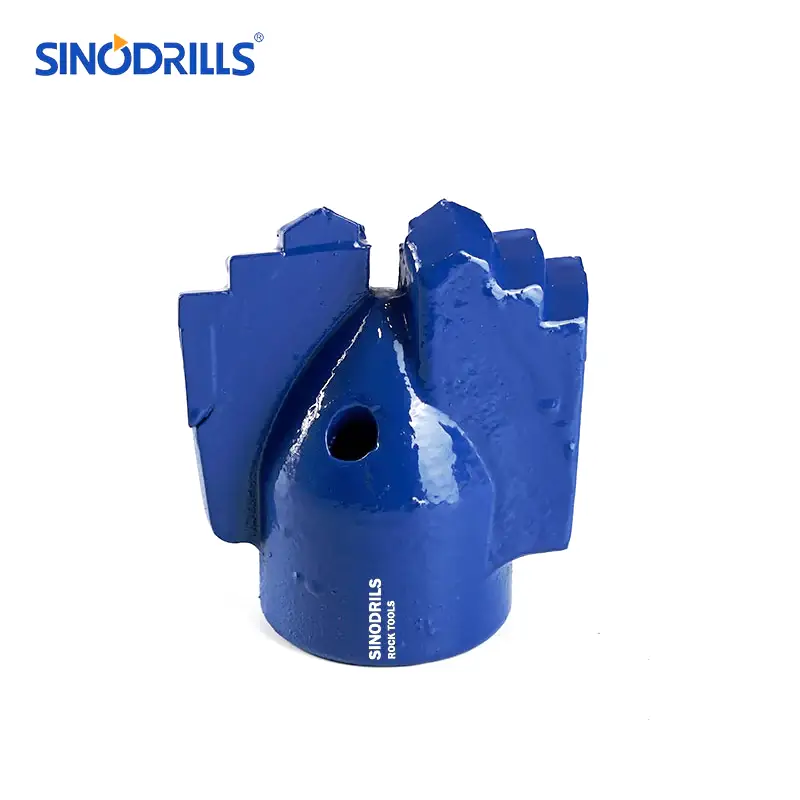
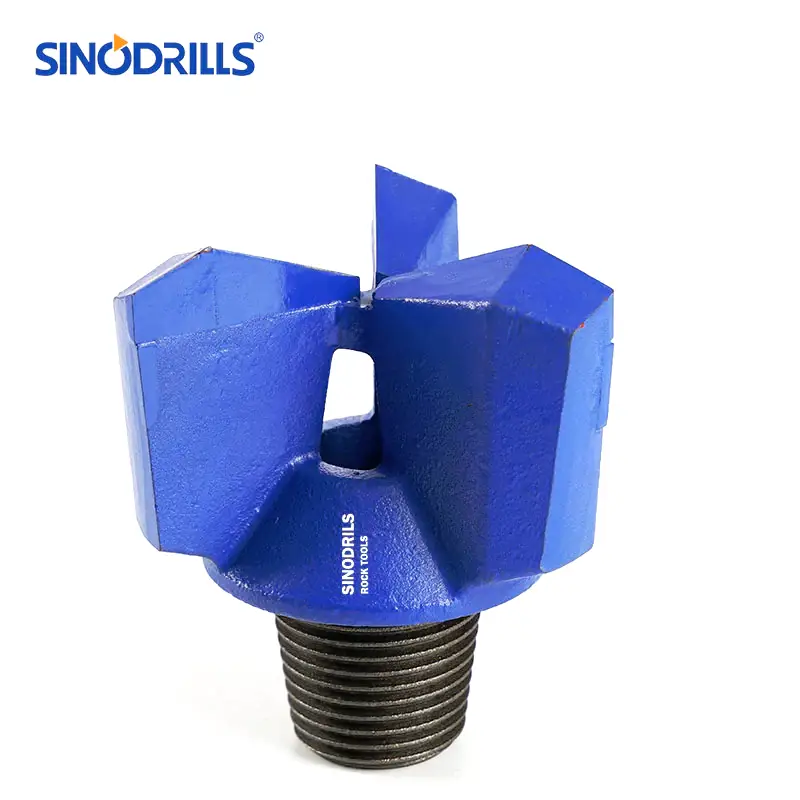
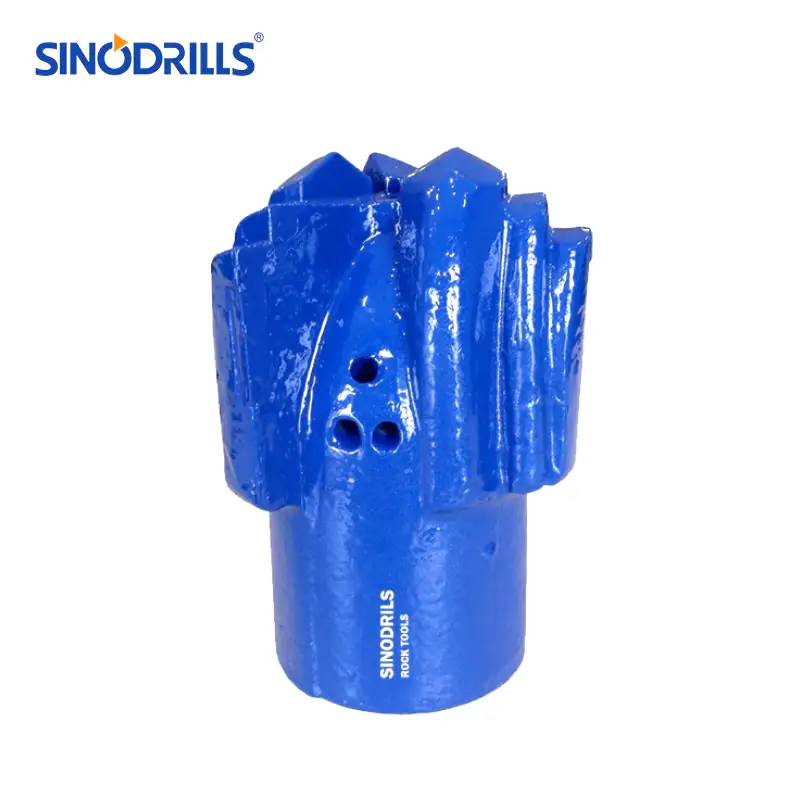
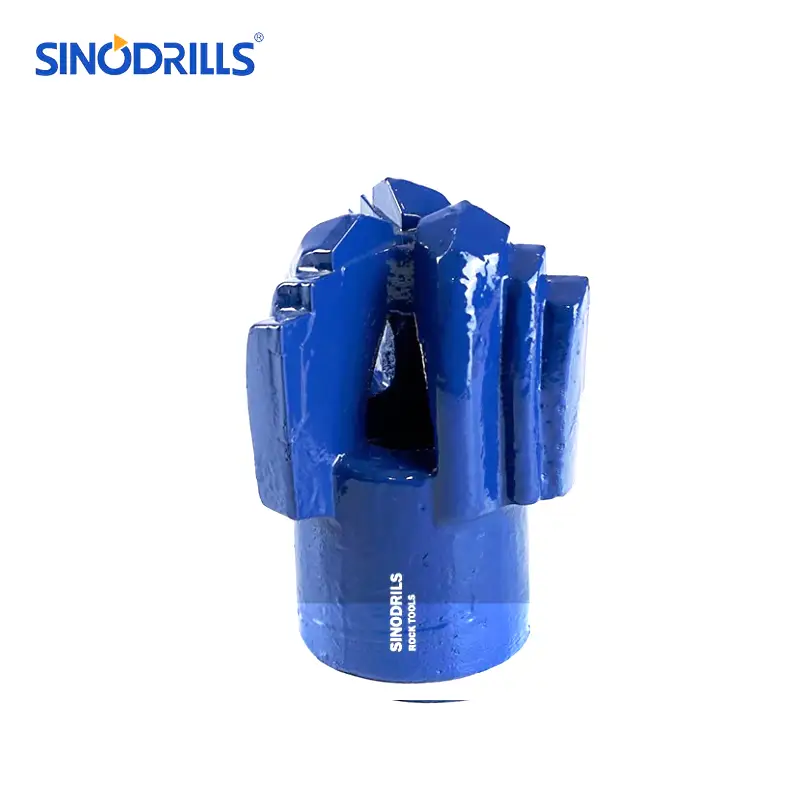
Drag drill bits are the simplest type, featuring fixed blades or “wings” with tungsten carbide inserts. They cut through soft, non-consolidated formations like sand, soft clay, and unconsolidated sediments by scraping and dragging the material away from the face of the borehole.
While unsuitable for hard rock, they are ideal for drilling shallow pilot holes or for quickly advancing through topsoil and soft overburden. They offer a cost-effective solution for initial site investigation and shallow utility installation in easily penetrable formations.
How to Choose Drill Bits for Civil Engineering?
Choosing the correct drill bits is arguably the most critical decision in any subsurface Civil Engineering project, directly affecting cost, timeline, and data accuracy. The selection process must be systematic, factoring in various on-site variables to ensure efficiency and the structural integrity of the final infrastructure.
The primary considerations for selecting the right drill bit include:
- Geological Formation: This is the chief factor, determining the bit’s required hardness and cutting action. Soft ground (sand, clay) requires auger drill bits or drag bits, while extremely hard rock formations (granite, basalt) demand robust DTH hammer drill bits or diamond core bits for effective penetration and longevity.
- Drilling Purpose: The objective of the drilling dictates the type of bit geometry needed. For foundation sampling and soil analysis, core drill bits are necessary to retrieve intact materials. Conversely, creating large, deep holes for caissons typically requires large-diameter rotary roller cone drill bits.
- Required Hole Diameter and Depth: The size and reach of the required borehole limit the usable equipment. Shallow, small-diameter holes for utility testing might use simpler drag drill bits, whereas deep, wide holes for major bridge piers necessitate powerful, large-format rotary drill bits and heavy drilling rigs.
- Equipment Capabilities: The chosen bit must be compatible with the available drilling rig’s power, torque, and fluid capabilities. A powerful percussive DTH hammer drill bit cannot be used with a rig designed only for continuous rotary action, ensuring the entire system works harmoniously.
- Budget and Time Constraints: While a superior, long-lasting bit (like a diamond bit) may have a higher initial cost, it can drastically reduce project time and replacement frequency. Balancing the initial purchase price of wholesale drill bits with their expected lifespan and drilling speed is a major economic consideration.
Conclusion
The seemingly simple drill bit is, in fact, an indispensable piece of technology that directly determines the safety and longevity of our infrastructure. From geological sampling and soil testing to anchor installation and deep foundation drilling, the quality and type of bit chosen is a key factor in mitigating risk and ensuring project success in Civil Engineering.
By prioritizing high-quality drilling equipment, Civil Engineering professionals ensure they have the precision and power needed to tackle any geological challenge. Investing in reliable, durable bits reduces downtime, improves accuracy, and ultimately secures the stability of the structures we build upon the earth. Don’t compromise on this essential component.
For your next major infrastructure project, ensure you are equipped with the best tools available. You can get wholesale drill bits directly from Sinodrills, offering a comprehensive range of rotary, core, and percussion bits engineered for the toughest civil applications. Trust Sinodrills to provide the reliability your projects demand.