
Micropiles and soil nailing are widely used ground improvement and slope stabilization techniques in construction and civil engineering. Both methods enhance soil stability, support foundations, and prevent landslides, but they differ in installation, load capacity, and applications. Understanding these differences helps engineers select the most effective solution for specific site conditions.
Micropiles are small-diameter, high-strength drilled and grouted piles, while soil nailing involves reinforcing existing slopes with closely spaced steel bars. Each method has unique advantages depending on soil type, project scale, and load requirements. This guide explores their characteristics, applications, and practical considerations to help make informed foundation and slope stabilization decisions.
What are Micropiles?
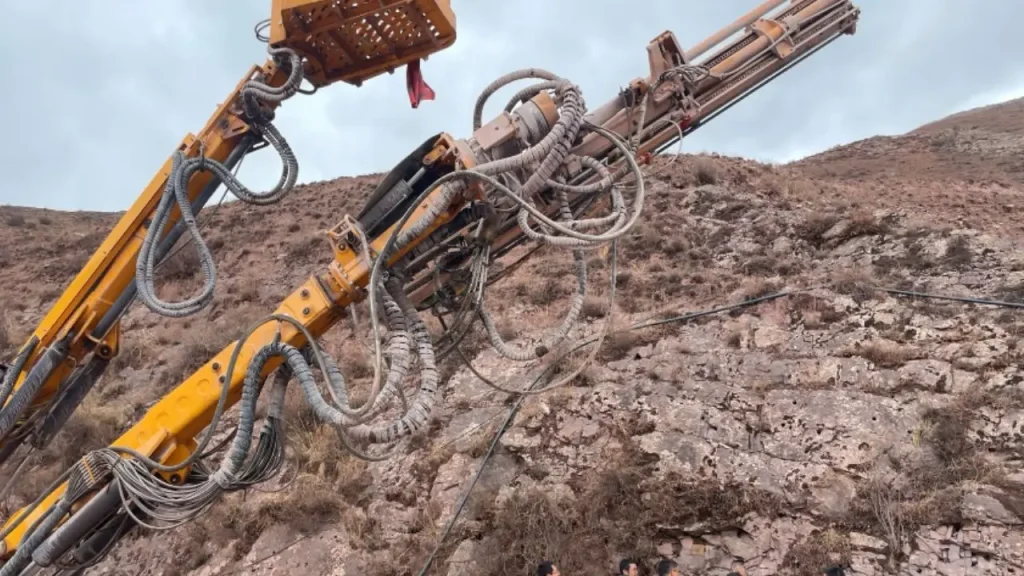
Micropiles are small-diameter, high-strength, drilled and grouted piles used to transfer structural loads to deeper, more stable soil or rock layers. They are versatile, suitable for limited access sites, and ideal for reinforcing foundations, slopes, or existing structures. Their high load capacity and adaptability make them essential in modern civil and geotechnical engineering projects.
- Foundation Support: Micropiles provide deep foundation reinforcement for buildings, bridges, and industrial structures. We install them in weak or variable soil conditions to transfer loads to competent layers, ensuring stability, reducing settlement, and maintaining alignment in both new construction and retrofit projects.
- Slope Stabilization: Micropiles stabilize slopes, embankments, and retaining walls by anchoring loose soil to stable strata. We design them to resist lateral movement and prevent landslides, providing long-term slope integrity and enhancing safety in construction, mining, and infrastructure projects in challenging terrain.
- Seismic and Structural Retrofits: Micropiles strengthen existing foundations against seismic activity, vibrations, and structural loads. We integrate them into retrofitting projects for buildings, bridges, and industrial facilities, enhancing load capacity, reducing settlement, and improving overall resilience against dynamic forces and ground movement.
- Restricted Access Installations: Micropiles are ideal for areas with limited space or obstacles, such as urban sites or under existing structures. We use small drilling rigs and precise installation techniques, allowing effective foundation reinforcement without extensive excavation or disruption to surrounding structures and operations.
- Utility and Infrastructure Projects: Micropiles support tunnels, pipelines, and underground utilities by transferring loads to stable soil or rock layers. We use them to maintain alignment, reduce settlement risks, and provide reliable structural support in complex civil engineering projects where conventional piling methods may be impractical.
What are Soil Nailings?
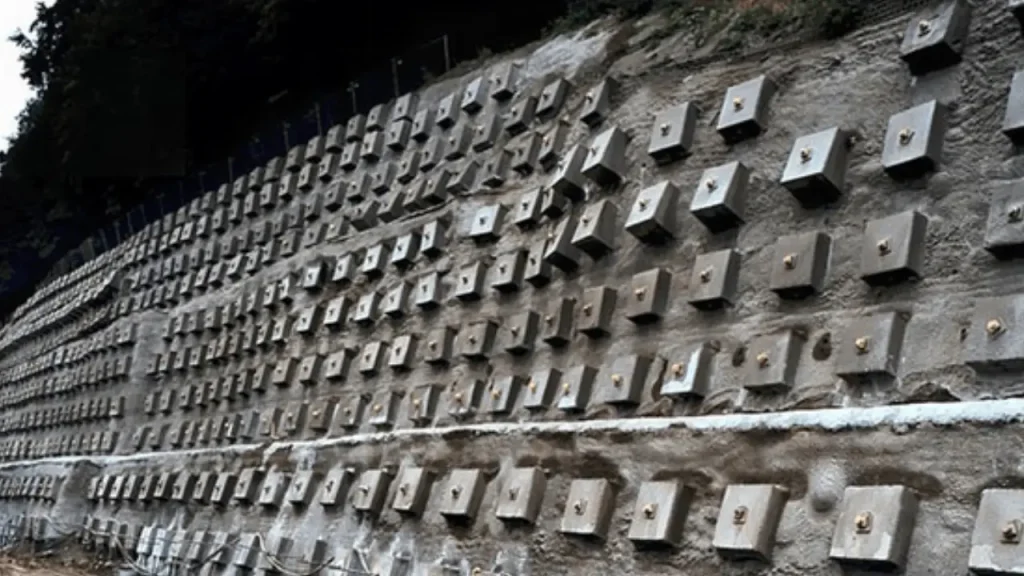
Soil nailing is a ground reinforcement technique that stabilizes slopes, excavation walls, and embankments by inserting closely spaced steel bars into existing soil and anchoring them with grout. This method increases soil strength, resists lateral movement, and prevents erosion or collapse. Soil nailing is cost-effective, minimally invasive, and widely used in civil and geotechnical engineering projects.
- Slope Stabilization: Soil nailing reinforces natural and man-made slopes to prevent landslides and erosion. We install steel bars into the slope, apply grout, and add facing panels if needed, providing long-term stability while maintaining the natural slope profile and reducing surface movement.
- Excavation Support: Soil nailing strengthens retaining walls and deep excavation sites. We use nails to hold soil in place during construction, allowing safe temporary or permanent support. This method reduces the need for extensive shoring or heavy structural walls, saving time and construction costs.
- Road and Highway Projects: Soil nailing is effective for stabilizing highway cuttings, embankments, and roadside slopes. We reinforce soil adjacent to roads to prevent collapse, maintain traffic safety, and extend the lifespan of infrastructure, especially in hilly or unstable terrains.
- Bridge Abutments and Retaining Structures: Soil nailing supports bridge abutments and retaining walls by anchoring soil behind structures. We integrate nails with concrete or shotcrete facings to improve load distribution, prevent wall movement, and enhance structural durability under varying environmental and load conditions.
- Urban Construction Applications: Soil nailing is ideal for urban areas where space is limited and excavation is constrained. We use it to stabilize soil behind buildings or underground structures without large-scale excavation, minimizing disruption, reducing costs, and maintaining safety in densely built environments.
Micropiles vs Soil Nailing
Micropiles and soil nailing are both ground reinforcement techniques used to stabilize foundations, slopes, and structures, but they differ in design, installation methods, and applications. Understanding these differences is crucial for selecting the most effective solution based on soil conditions, load requirements, site access, and long-term performance.
Load Capacity
Micropiles provide high load-bearing capacity, capable of supporting heavy structures, deep foundations, and retrofitted buildings. Their drilled and grouted design transfers loads to competent soil or rock layers. This makes them ideal for both new construction and strengthening existing foundations under significant stress.
Soil nailing is more suitable for stabilizing soil and slopes rather than supporting extremely heavy vertical loads. Nails reinforce the existing soil mass, resisting lateral movement and preventing collapse. While effective for retaining walls and slopes, their load capacity is generally lower than micropiles, requiring careful engineering for high-load projects.
Installation Method
Micropiles are installed by drilling small-diameter holes, inserting steel reinforcement, and grouting them in place. This method works in confined spaces and under existing structures, allowing deep anchoring without major excavation. Installation is precise and adaptable to varying soil and rock conditions.
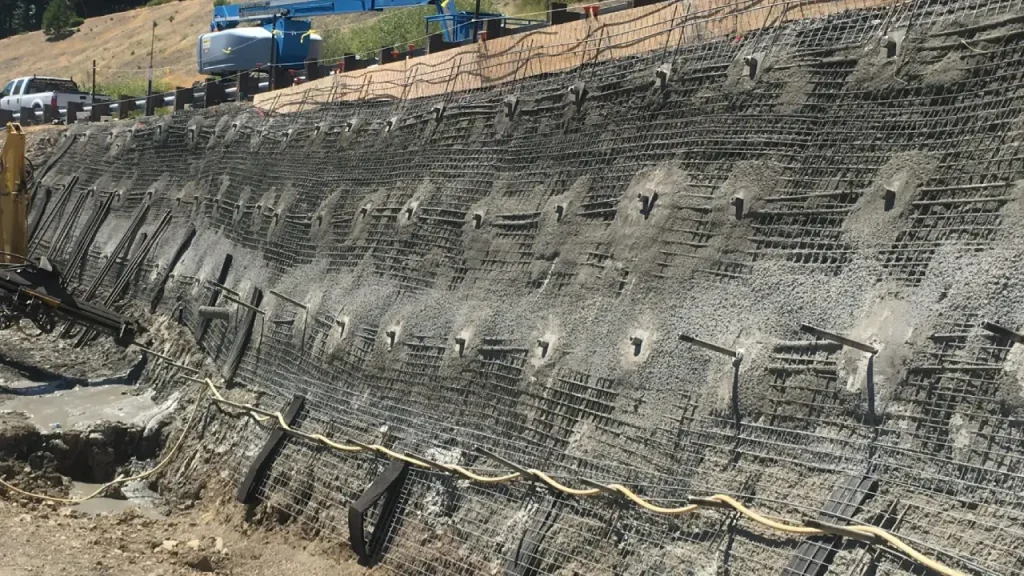
Soil nailing involves drilling holes into the slope or excavation face, inserting steel bars, and grouting them. Often combined with shotcrete facings, this method reinforces the soil mass in situ. Installation is less invasive than full excavation but mainly suitable for shallow to medium-depth stabilization projects.
Application Areas
Micropiles are versatile and used in building foundations, bridges, industrial machinery bases, and seismic retrofits. They perform well in weak soil, restricted-access sites, and areas requiring deep structural support, making them ideal for complex engineering projects where high load capacity is critical.
Soil nailing is primarily applied in slope stabilization, retaining walls, highway cuttings, and excavation support. It is effective in preventing landslides, erosion, and wall collapse. While it strengthens soil masses, it is generally limited to applications where deep foundation support is not required.
Cost and Time Efficiency
Micropile installation is more costly and time-consuming due to drilling, steel reinforcement, and grouting processes. However, it provides long-term benefits, high load capacity, and adaptability to difficult sites, offsetting initial investment through improved structural performance and reduced maintenance.
Soil nailing is generally faster and more cost-effective, especially for slope stabilization and temporary excavation support. Minimal excavation and simpler installation reduce labor and equipment costs. It is ideal when budget or project timelines are constrained, although it may require additional measures for long-term heavy load support.
Environmental and Site Constraints
Micropiles are suitable for restricted-access sites, urban areas, and locations with limited space. Their small diameter and precision drilling minimize disruption to existing structures and surrounding soil, making them environmentally friendly in sensitive or built-up areas.
Soil nailing works best where slopes or excavations are accessible and can be reinforced in situ. It requires exposed soil faces and is less suitable for deep foundation work under buildings. While it reduces excavation impact, it may not provide adequate support in extremely weak or heavily loaded soils.
Here are the differences between micropiles and soil nailings:
| Aspect | Micropiles | Soil Nailing |
|---|---|---|
| Load Capacity | High, supports heavy structures | Moderate, primarily lateral soil support |
| Installation Method | Drilled, reinforced, grouted piles | Drilled nails with grout and shotcrete |
| Application Areas | Foundations, bridges, machinery, retrofits | Slopes, retaining walls, excavations |
| Cost and Time Efficiency | Higher cost, longer installation | Lower cost, faster installation |
| Environmental/Site Constraints | Suitable for restricted-access and urban areas | Works where soil faces are exposed, limited depth |
How to Choose Micropiles and Soil Nailings?
Choosing between micropiles and soil nailing requires careful consideration of project requirements, soil conditions, load demands, and site accessibility. Proper selection ensures structural stability, cost efficiency, and long-term performance. Understanding the differences in capacity, installation methods, and applications helps engineers and contractors determine the most suitable ground reinforcement technique for each project.
- Assess Load Requirements: Evaluate the vertical and lateral loads that the structure or slope must withstand. We consider soil strength, structure weight, and environmental forces to determine whether micropiles’ high load capacity or soil nailing’s lateral reinforcement is most appropriate for the project’s safety and performance.
- Evaluate Soil and Ground Conditions: Soil type, depth, and stability affect which method is best. We examine subsurface conditions to decide if micropiles can reach stable strata for deep foundations or if soil nailing will adequately reinforce existing soil masses to prevent slope movement or collapse.
- Consider Site Accessibility: Space constraints, urban environments, and existing structures influence installation feasibility. We select micropiles for confined or restricted-access sites requiring deep support, while soil nailing works well for exposed slopes or excavations where surface reinforcement is sufficient without major equipment or excavation.
- Determine Project Purpose: Identify whether the goal is foundation support, slope stabilization, or retrofit reinforcement. We match the method to the intended outcome, using micropiles for heavy foundations or seismic retrofits and soil nailing for stabilizing slopes, retaining walls, and temporary excavations.
- Analyze Cost and Timeline: Budget and construction schedule play a significant role. We consider installation complexity, material costs, and labor requirements. Soil nailing is generally faster and more cost-effective for shallow stabilization, whereas micropiles, though more expensive, provide durable deep support for critical or high-load structures.
Conclusion
Micropiles provide deep foundation support, high load-bearing capacity, and versatility in challenging soil conditions. Soil nailing, on the other hand, reinforces existing slopes and excavation walls effectively with minimal excavation. Choosing the appropriate method depends on project requirements, soil conditions, and structural demands to ensure safety and stability.
While micropiles are ideal for heavy loads, restricted access, and deep foundations, soil nailing works best for slope stabilization and retaining structures. Both methods require careful design, material selection, and installation practices to maximize performance, prevent failures, and ensure long-term structural integrity under varying environmental and operational conditions.
For reliable, high-performance anchoring solutions, get wholesale self drilling anchor bars from Sinodrills. We provide durable, precision-engineered products suitable for micropiles, soil nailing, and other ground reinforcement projects, ensuring consistent quality, strong load capacity, and long-term stability for your construction and civil engineering applications.