
Ground anchors and soil nails are two common methods used for soil stabilization in construction and engineering projects. While both techniques serve similar purposes, their designs and applications differ significantly. This blog explores the key distinctions between ground anchors and soil nails, helping you understand their suitability for various soil stabilization needs.
In this post, we’ll delve into the advantages, installation processes, and specific uses of both methods. Whether you’re involved in foundation work, retaining wall construction, or slope stabilization, understanding these differences will guide you in choosing the best option for your project. Let’s take a closer look at how they compare.
What is a Ground Anchor?
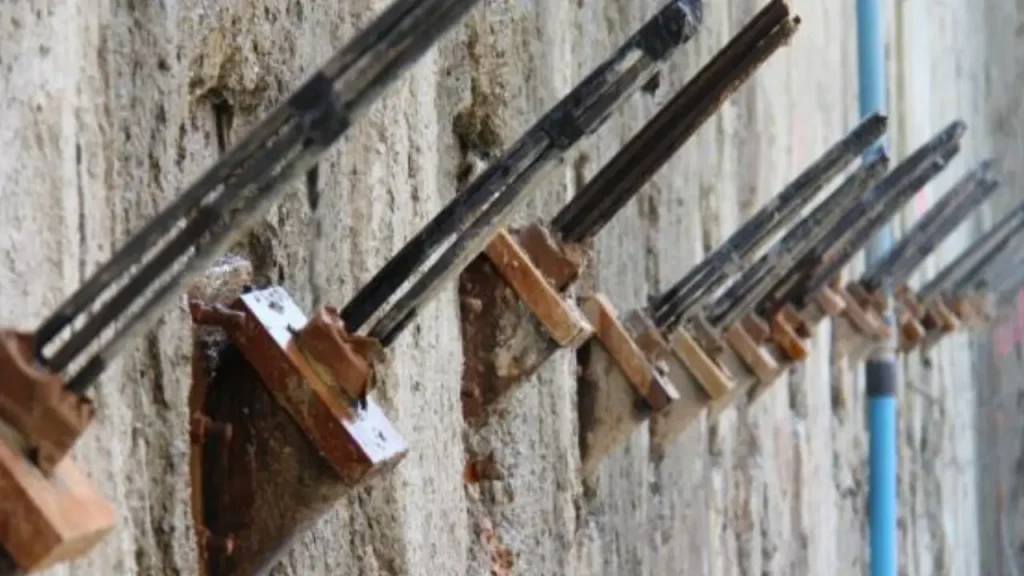
A ground anchor is a device used to secure structures or retain soil by anchoring them to the ground. It provides stability in various construction and civil engineering projects. Ground anchors are typically installed by drilling into the ground and then applying a tension load to stabilize slopes, walls, or foundations.
Uses of Ground Anchors:
- Slope Stabilization: Ground anchors are widely used in slope stabilization projects to prevent landslides and erosion. By securing the slope to solid ground, they provide long-term protection against soil movement, ensuring the safety of structures built on or near unstable terrain.
- Retaining Walls: Ground anchors support retaining walls, providing the necessary tension to hold back soil or other materials. They help prevent the wall from failing under pressure, which is crucial in preventing damage to nearby structures or landscapes.
- Bridge Foundations: Ground anchors are often used in bridge construction to stabilize the foundations and prevent shifting due to external forces like water flow or seismic activity. They ensure that the bridge’s structure remains firm and reliable over time.
- Excavation Shoring: During deep excavation projects, ground anchors provide additional support to prevent the surrounding soil from collapsing. They are used to reinforce trench boxes, shoring systems, or temporary retaining walls, ensuring worker safety and project efficiency.
- Tensioned Foundations: Ground anchors are applied in tensioned foundations for structures such as towers or high-rise buildings. They anchor the foundation deeply into the ground, providing resistance to vertical and lateral forces from wind, earthquakes, or heavy loads.
What is a Soil Nail?
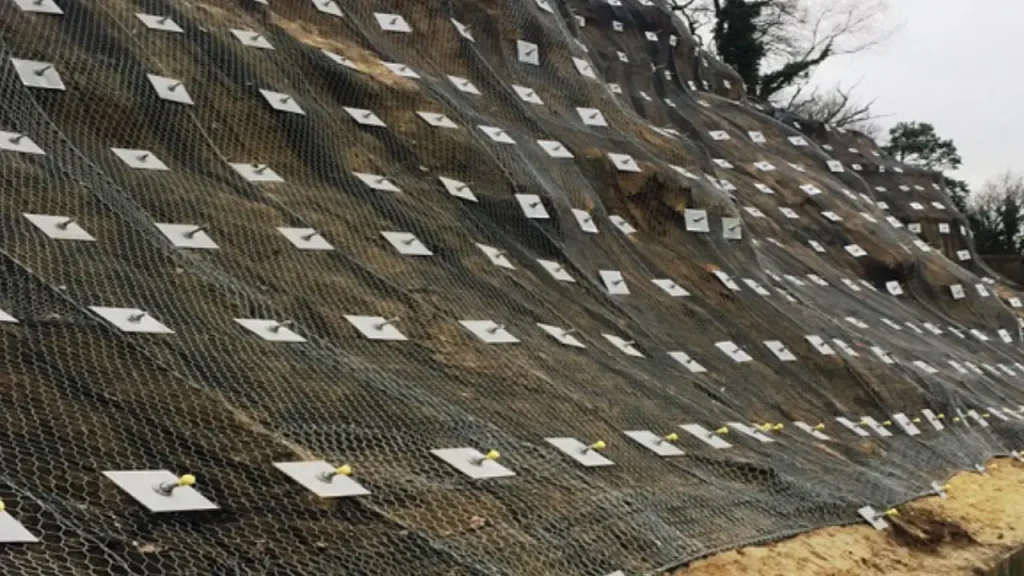
A soil nail is a long steel bar that is inserted into the ground to provide stability to slopes, excavations, or retaining walls. It works by reinforcing the soil to prevent movement, typically installed in conjunction with shotcrete or other materials to create a strong, supportive structure. Soil nails are widely used in civil engineering for soil stabilization projects.
Uses of Soil Nails:
- Slope Stabilization: Soil nails are commonly used to stabilize slopes, preventing soil movement and landslides. The nails help secure the soil layers and improve the overall stability of the terrain, reducing the risk of slope failure and protecting structures built on or near the slope.
- Excavation Shoring: In deep excavation projects, soil nails are used for shoring purposes. They help hold back the surrounding soil and prevent cave-ins, ensuring the safety of workers and the integrity of nearby structures. The nails are usually installed in a grid pattern for maximum support.
- Retaining Walls: Soil nails are often part of retaining wall systems, providing additional reinforcement. When combined with shotcrete or other materials, soil nails help retain soil and prevent erosion or movement, ensuring the retaining wall remains structurally sound over time.
- Foundation Support: Soil nails can be used to stabilize the foundation of structures, particularly in areas with weak or shifting soil. By providing additional support to the foundation, soil nails reduce the risk of settlement or structural damage, ensuring long-term stability.
- Tunneling and Mining: In tunneling and mining projects, soil nails are used to secure unstable rock or soil. They prevent rockfalls and soil movement, ensuring safe working conditions in underground environments. Soil nails are often combined with other techniques like shotcrete for comprehensive ground support.
Ground Anchor vs Soil Nail
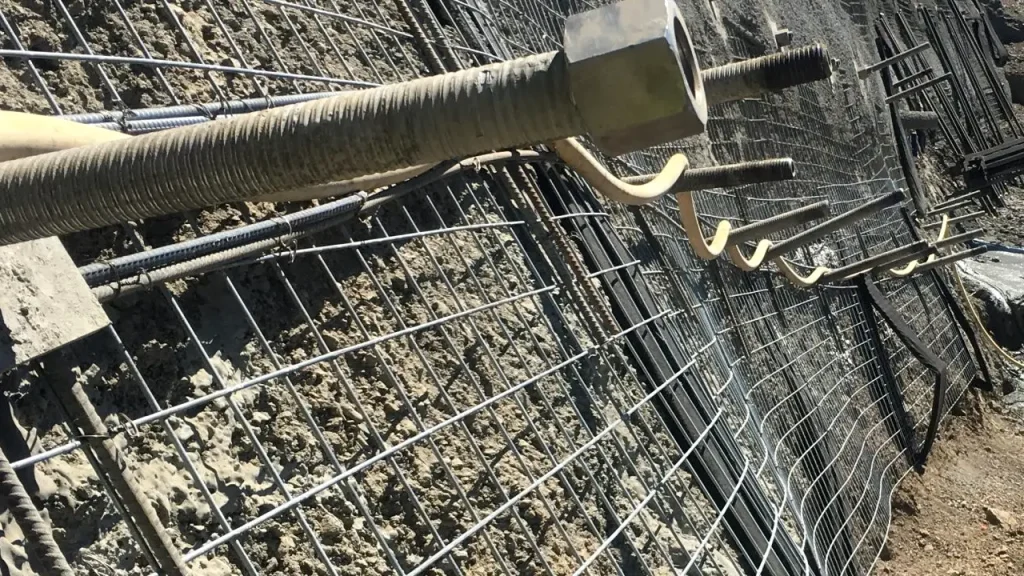
Ground anchors and soil nails are both used for soil stabilization, but they serve different purposes and are applied in different scenarios. While both methods provide support and prevent soil movement, the design, installation process, and typical applications of each technique differ.
Let’s explore the key aspects of each method to understand their differences.
Installation Process
Ground anchors are installed by drilling into the ground and inserting steel tendons or bars that are tensioned to provide a strong connection to the soil. The process involves drilling a hole, inserting the anchor, and then applying tension.
Soil nails, on the other hand, are installed by drilling smaller holes into the soil and inserting steel bars, which are then grouted in place. Soil nails typically don’t require as much depth as ground anchors, and the installation process is quicker.
Load-Bearing Capacity
Ground anchors are known for their high load-bearing capacity, making them ideal for deep stabilization projects. They can handle both vertical and lateral forces, which makes them suitable for projects like bridge foundations, deep excavation shoring, and high-rise buildings.
Soil nails, while strong, are typically used for lighter loads and shallow applications, such as slope stabilization or shallow excavation support.
Applications
Ground anchors are used in deep and large-scale projects where significant stabilization is required, such as in deep excavations, bridge foundations, and slope stabilization on steep terrains. They are also ideal for projects that require high tension or are subject to high load-bearing demands.
Soil nails are generally used for smaller projects like shallow slope stabilization, excavation shoring, or reinforcing retaining walls, where minimal load-bearing support is needed.
Durability and Maintenance
Ground anchors are highly durable, designed to withstand harsh conditions and long-term tension. They are often used in permanent installations but may require periodic monitoring and maintenance to ensure their continued performance.
Soil nails, on the other hand, are also durable, but their longevity depends on the type of soil and the environmental conditions. In some cases, soil nails may require more frequent maintenance or replacement, especially in softer soils.
Cost and Installation Time
Ground anchors typically involve higher upfront costs due to the complexity of installation and the materials required for deeper anchoring. They also take more time to install, which can increase overall project costs.
Soil nails are more cost-effective and quicker to install, making them a more budget-friendly solution for smaller-scale projects or those requiring less intensive stabilization.
Here are some differences between ground anchors and soil nailings:
| Aspect | Ground Anchor | Soil Nail |
|---|---|---|
| Installation | Deeper installation, requires drilling and tensioning | Shallow installation, grouted into soil |
| Load Capacity | High load-bearing capacity | Suitable for lighter loads |
| Applications | Deep excavation, bridge foundations, steep slopes | Shallow slope stabilization, retaining walls |
| Durability | Long-lasting, requires periodic monitoring | Durable but may need more frequent maintenance |
| Cost & Time | Higher cost, longer installation time | More cost-effective, quicker installation |
How to Choose Ground Anchors and Soil Nails?
Choosing the right ground anchors and soil nails depends on various factors like soil conditions, project requirements, and load-bearing capacity. Both methods offer unique benefits and should be selected based on the specific demands of the construction or stabilization project. Here are key factors to consider when making your choice.
Factors to Consider:
- Soil Conditions: Assessing soil type is crucial. Ground anchors are more suitable for dense or hard soils, while soil nails are ideal for softer, more granular soils. Understanding the soil composition ensures that the chosen method provides maximum stability and longevity.
- Load Requirements: Ground anchors are better for projects that require high load-bearing capacity, such as deep excavations or bridge foundations. Soil nails, while effective for lighter loads, are ideal for smaller-scale applications like shallow slope stabilization or retaining walls.
- Depth of Stabilization: For deeper stabilization needs, ground anchors are the better option. They can be installed to greater depths, providing more robust and long-lasting support. Soil nails are typically used for shallower stabilization and may not be effective for deeper projects.
- Project Scale and Budget: Ground anchors are generally more expensive and time-consuming to install. If you’re working on a larger or more complex project with higher demands, they may be necessary. For smaller or budget-sensitive projects, soil nails provide a more cost-effective and quicker solution.
- Environmental Conditions: Environmental factors such as water content, freezing temperatures, or seismic activity can influence your choice. Ground anchors offer greater resistance to extreme conditions, while soil nails are ideal for areas where conditions are less harsh or in regions with low seismic activity.
Conclusion
In summary, both ground anchors and soil nails are vital tools in the construction industry for soil stabilization, each with unique characteristics suited to different conditions. Ground anchors excel in deeper applications, offering higher load-bearing capacity, while soil nails are often ideal for shallow excavations and slope stabilization.
Choosing between ground anchors and soil nails depends on factors such as project depth, load requirements, and soil conditions. By evaluating these criteria, you can select the method that best meets your engineering needs. Understanding their differences is crucial for making an informed decision for any construction or excavation project.
For your next soil stabilization project, get wholesale self-drilling anchor systems from Sinodrills. Our premium solutions provide reliable performance and ease of installation. Contact us today to discuss your requirements and secure the best anchors for your project.